






What's Happening?
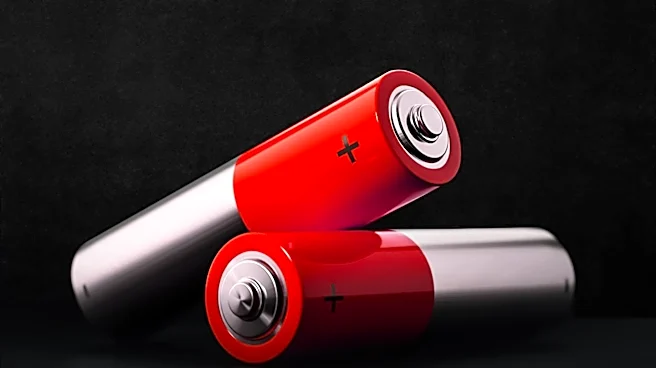
Verbatim has announced the upcoming launch of new rechargeable lithium-ion AA, AAA, and 9V batteries, which will feature USB-C charging capabilities. These batteries are designed to replace traditional disposable batteries and offer an advantage over
1.2V rechargeable batteries by maintaining a 1.5V output for AA and AAA models and 9V for the larger battery, ensuring compatibility with a wider range of devices. The integration of USB-C ports means users can charge these batteries without needing a dedicated charger, enhancing convenience, especially for travelers. Verbatim plans to include a multi-connector charging cable with the AA and AAA batteries. The company has not yet disclosed pricing details but expects the products to be available within the next few weeks. The AAA batteries have a capacity of 0.75Wh (around 500mAh), the AA batteries 3.15Wh, and the 9V battery approximately 3Wh (335mAh).
Why It's Important?
This development is significant for U.S. consumers and the electronics market, as it addresses common frustrations associated with traditional rechargeable batteries. The consistent voltage output of 1.5V for AA and AAA batteries solves compatibility issues with devices that struggle to accurately estimate remaining capacity with 1.2V NiMH batteries, potentially extending the lifespan and reliability of various household and personal electronic devices. The inclusion of USB-C charging is a major convenience factor, reducing the need for specialized chargers and cables, which aligns with the growing trend of universal charging standards. This could lead to increased adoption of rechargeable batteries, reducing waste from disposable batteries and offering long-term cost savings for consumers. For businesses, this innovation could influence product design for devices that rely on these battery types, potentially leading to more efficient and user-friendly products.
What's Next?
Verbatim expects to launch these new USB-C rechargeable batteries within the next few weeks, though specific pricing information is still pending. Upon release, consumers will be able to purchase these batteries, potentially shifting purchasing habits away from disposable alternatives. The market will observe how these batteries perform in real-world scenarios, particularly regarding their discharge curve simulation, which will determine how accurately devices can estimate remaining charge. If successful, this could prompt other battery manufacturers to adopt similar USB-C charging and voltage regulation technologies, further standardizing and improving the rechargeable battery market. The availability of these batteries could also influence the design of future electronic devices, encouraging manufacturers to optimize for 1.5V rechargeable power sources.
Beyond the Headlines
The introduction of USB-C rechargeable lithium-ion batteries by Verbatim represents a broader shift towards greater convenience and sustainability in consumer electronics. By eliminating the need for proprietary chargers and offering a more consistent voltage, these batteries could significantly reduce electronic waste and the environmental impact of disposable batteries. This innovation also highlights the increasing importance of universal connectivity standards like USB-C, which simplify the user experience and reduce clutter. Ethically, promoting rechargeable solutions aligns with environmental responsibility, encouraging consumers to make more sustainable choices. Culturally, it reinforces the expectation of seamless, integrated technology in daily life, where charging solutions are as simple as plugging into a common port. This could set a new benchmark for battery technology in the consumer market, pushing for more efficient and eco-friendly power solutions.