





What's Happening?
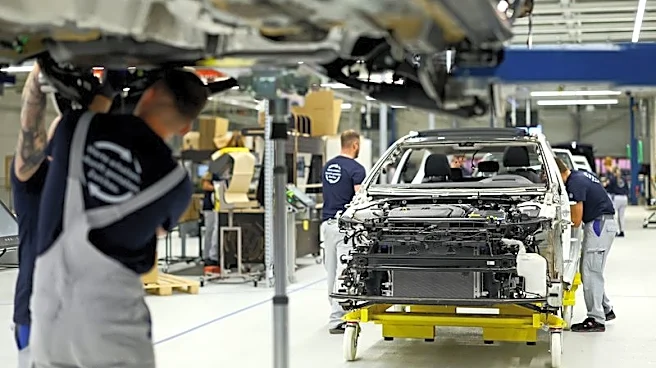
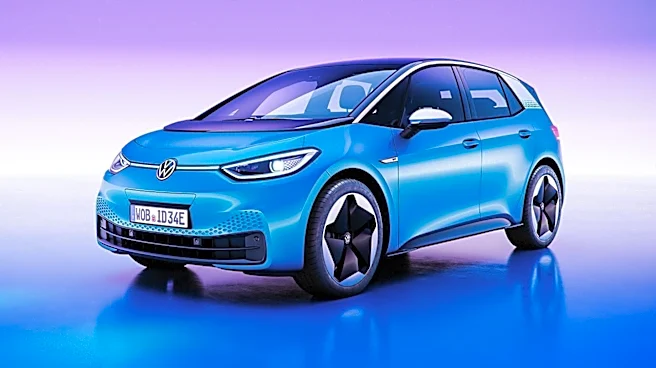
Volkswagen's recent restructuring and plant closures in early 2026 have brought increased attention to Chinese electric vehicle (EV) manufacturers, particularly NIO. This development underscores the cost and competitiveness pressures faced by Western
automakers. NIO, along with other Chinese EV leaders like BYD and XPeng, is noted for its focus on premium smart EVs that integrate hardware, software, and energy services. The company's multi-brand strategy, encompassing NIO, ONVO, and FIREFLY, and its technology-heavy approach are now seen in sharper contrast to Western rivals who are re-evaluating their electric vehicle plans. A significant recent development for NIO is its partnership and capital recycling involving NIO Power, where selling a 30% stake in the battery swapping unit for approximately RMB 16 billion brought in external capital while allowing NIO to retain control of the infrastructure asset. This move is crucial as the build-out of swap and charging infrastructure is capital-intensive, and NIO currently reports a net loss of CN¥4,755.9 million on CN¥114,113.6 million of revenue.
Why It's Important?
The spotlight on NIO due to Volkswagen's restructuring is significant for the U.S. and global automotive markets. It highlights the growing competitive threat posed by Chinese EV manufacturers to established Western brands. For U.S. consumers, this could mean a wider array of advanced EV options in the future, potentially driving innovation and price competition. For U.S. automotive companies, it serves as a clear indicator of the need to accelerate their own EV strategies and enhance technological integration to remain competitive. Investors in the U.S. market, particularly those in the EV sector, will be closely watching NIO's performance, as its success could influence investment trends and valuations across the industry. The external funding for NIO Power is particularly important as it could alleviate financial strain and support the expansion of its battery swapping stations, a key competitive differentiator. This could set a precedent for how EV infrastructure is financed and developed globally, impacting the broader EV ecosystem.
What's Next?
NIO's immediate future will largely depend on the market reception of its new models, such as the ES9 and ONVO L80, and FIREFLY refreshes. The key short-term challenge is whether these new models can sustain sales volumes without resorting to heavy discounting, especially given the intense price competition in China's EV market, which could keep vehicle gross margins around 18% to 19%. Analysts project NIO's revenue to reach CN¥173.6 billion and earnings to hit CN¥4.1 billion by 2029, driven by 15.0% yearly revenue growth. The company aims to swing from its current loss of CN¥4.8 billion to a projected profit level. The continued execution of its NIO Power strategy, including the rollout of fifth-generation swap stations, will be critical for reinforcing its competitive advantages. The broader implications of Volkswagen's restructuring on the global EV landscape will also continue to unfold, potentially influencing strategic decisions by other major automakers.
Beyond the Headlines
The increased focus on NIO and other Chinese EV manufacturers following Volkswagen's restructuring points to a deeper shift in the global automotive industry's power dynamics. This development is not merely about market share but also about technological leadership and business model innovation. NIO's integrated approach, combining vehicles, software, and energy services, represents a comprehensive ecosystem that could redefine consumer expectations for EV ownership. The emphasis on battery swapping, as opposed to traditional charging, offers a unique value proposition that could address range anxiety and charging times, potentially influencing infrastructure development strategies worldwide. Furthermore, the ability of Chinese companies to attract significant external funding for capital-intensive projects like battery swapping networks highlights a growing confidence in their long-term viability and technological prowess. This could lead to a re-evaluation of investment strategies by global capital, potentially diverting funds towards innovative models emerging from the East.