





What's Happening?
Jensen Huang has returned to his position as CEO of Nvidia, following his resignation on November 12 due to revelations of extramarital affairs, including one with a subordinate, and suspicions regarding the circumvention of chip export restrictions to China.
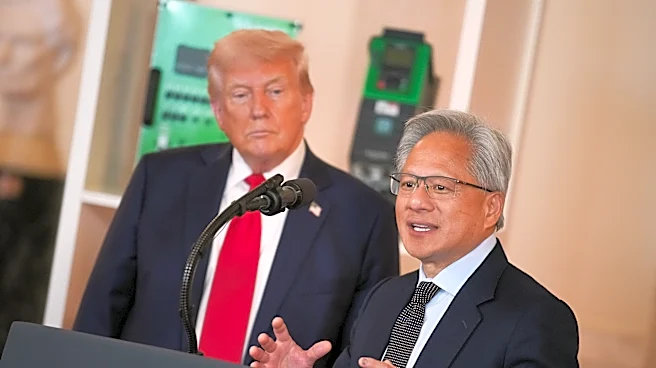
His return has reignited criticisms concerning the impunity of powerful men and sexism within the tech industry. The interim CEO, Colette Kress, Nvidia's Chief Financial Officer, was appointed during Huang's absence. President Trump publicly claimed credit for brokering Huang's return, stating on CNBC, 'It was I who concluded the deal.' This intervention followed a successful petition in Silicon Valley, supported by figures like Elon Musk, advocating for Huang's reinstatement. Investor Jason Calacanis lauded Huang as a 'hero,' downplaying the geopolitical scandal in favor of the U.S. winning the AI race against China.
Why It's Important?
The return of Jensen Huang to Nvidia's leadership highlights significant issues within the U.S. tech industry, particularly concerning corporate governance, ethical conduct, and gender inequality. The swift reinstatement of a CEO who resigned under a cloud of personal misconduct and geopolitical concerns suggests a prioritization of founder leadership over accountability, a sentiment echoed by venture capitalists who believe companies perform better with their founders at the helm. This situation also underscores the 'glass cliff' phenomenon, where women are appointed to leadership roles during crises and are then held responsible for potential failures or replaced once stability is restored. The intervention by President Trump adds a political dimension, suggesting that high-level political influence can impact corporate leadership decisions, especially in sectors deemed strategically important like AI, amidst the U.S.-China rivalry.
What's Next?
The immediate consequence of Jensen Huang's return is the end of Colette Kress's interim leadership. Her tenure, though brief, brought attention to the challenges faced by women in executive roles, particularly when navigating corporate crises. The tech industry will likely continue to grapple with the implications of this decision, including renewed discussions about ethical leadership, corporate responsibility, and the role of powerful individuals. Stakeholders, including investors and employees, will be observing how Nvidia's stock performance and strategic direction evolve under Huang's renewed leadership, especially concerning the ongoing U.S.-China competition in AI. The broader conversation about sexism and the 'hero worship' of male founders in Silicon Valley is also expected to intensify, potentially leading to increased scrutiny of corporate boards and their decision-making processes.
Beyond the Headlines
This event delves into the deeper ethical and cultural dimensions of the U.S. tech industry. The rapid return of Jensen Huang, despite the controversies, reflects a prevailing 'cult of the hero' mentality where the perceived indispensability of a founder can overshadow serious ethical lapses. This narrative is further complicated by the geopolitical context of the U.S.-China AI race, where national interests might be perceived to justify overlooking individual misconduct. The 'glass cliff' phenomenon, exemplified by Colette Kress's interim role, exposes systemic inequalities where women are often placed in precarious leadership positions during times of crisis, only to be replaced by men once the immediate threat subsides. This incident raises critical questions about the integrity of corporate leadership, the influence of political figures in private sector decisions, and the persistent challenges women face in achieving and maintaining leadership roles in male-dominated industries.