





What's Happening?
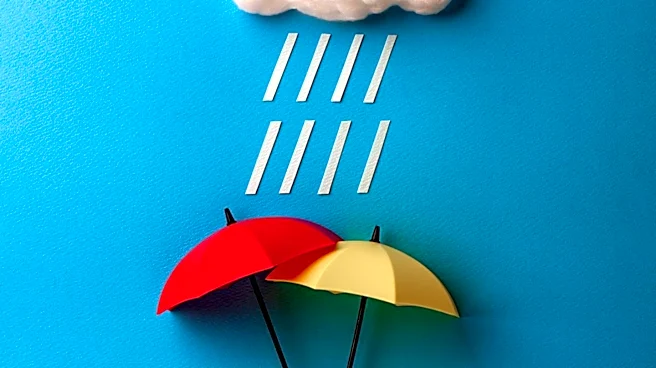
Maya Haddad Miller, co-owner of Brooklyn Beach Shop in Coney Island, New York, highlights the significant impact that weather apps have on small businesses. The simplified rain icons on these apps often lead to a decrease in customer turnout, even when
the actual weather is favorable. This issue is not isolated to her business; it affects many seasonal and weather-dependent businesses. The problem lies in the apps' oversimplification of complex weather data, which can mislead users about the actual weather conditions. Despite advancements in meteorological science, the translation of this data into simple icons on apps can result in economic losses for businesses reliant on accurate weather forecasts.
Why It's Important?
The economic implications of inaccurate weather app forecasts are substantial, particularly for businesses that depend on weather conditions for their operations. When weather apps inaccurately predict rain, it can lead to a significant drop in foot traffic and consumer spending, affecting sectors like retail, food service, and entertainment. This misrepresentation can deter potential customers, leading to lost revenue and reduced tax contributions to local economies. The issue underscores the need for more accurate and nuanced weather forecasting tools that can better inform both businesses and consumers, potentially leading to improved economic outcomes.
What's Next?
To address these challenges, there is a need for weather app developers to improve the accuracy and presentation of weather data. This could involve incorporating more detailed forecasts and better communicating the probability and uncertainty of weather events. Businesses may also need to educate consumers on interpreting weather forecasts more accurately. Additionally, local meteorologists and the National Weather Service could play a more prominent role in providing reliable weather information. These steps could help mitigate the economic impact of misleading weather forecasts on small businesses.
Beyond the Headlines
The reliance on simplified weather apps reflects a broader issue of how technology can inadvertently shape consumer behavior and economic outcomes. The convenience of quick weather checks on smartphones has led to a dependency that can overshadow more accurate sources of information. This situation highlights the importance of balancing technological convenience with the need for accurate and reliable data, especially in areas that directly affect economic activities and livelihoods.