




What's Happening?
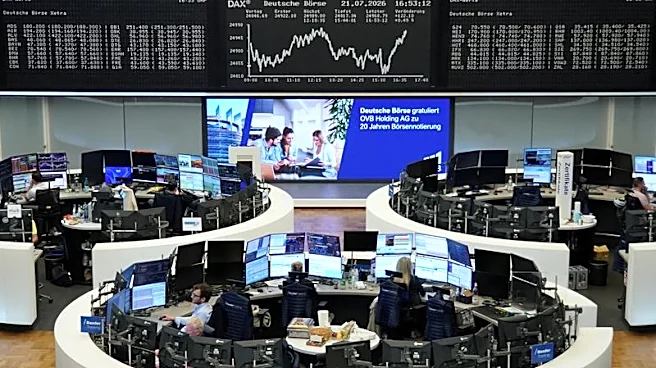
Shares of major chipmakers, including ASML, AMD, and Micron Technology, fell sharply following reports of a state-backed Chinese firm beginning mass production of domestic deep ultraviolet (DUV) lithography machines. This development threatens the sales
of older-generation tools by companies like ASML in the region. The Chinese advancement in DUV production, despite being slower and more expensive than extreme ultraviolet (EUV) production, is sufficient for near-frontier chips. This progress bypasses Western supply chains, unsettling policymakers and investors who had assumed China faced tighter constraints due to export controls.
Why It's Important?
China's ability to produce DUV lithography machines domestically represents a significant shift in the global semiconductor manufacturing landscape. This advancement could reduce China's reliance on Western technology and alter competitive dynamics in the chip industry. For companies like ASML, which have been dominant in the lithography market, this development could lead to reduced sales and market share. The broader implications include potential shifts in global supply chains and increased competition in the semiconductor sector, impacting pricing and availability of chips worldwide.
What's Next?
The semiconductor industry will need to adapt to the changing landscape as China continues to advance its domestic capabilities. Companies may need to explore new markets or invest in next-generation technologies to maintain their competitive edge. Additionally, regulatory and trade policies will play a crucial role in shaping the future of the industry, particularly concerning export controls and intellectual property rights. The market will also monitor China's ability to scale its production and the impact on global supply chains and pricing structures.