




What's Happening?
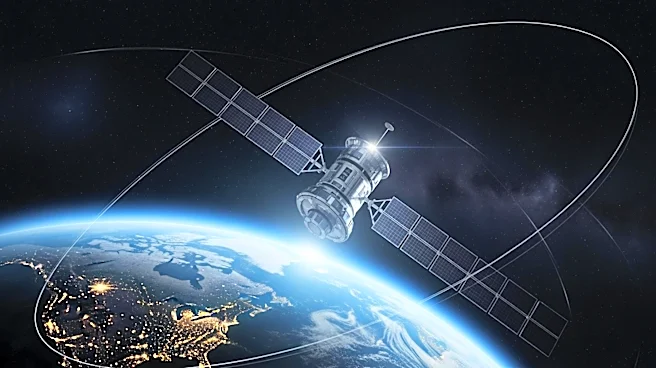
The concept of sustained maneuver in space missions is gaining attention due to the need for spacecraft to perform multiple maneuvers over their operational life. This involves maintaining a propulsion reserve to reposition, avoid threats, or support
new tasks as missions evolve. The propulsion system's efficiency, lifetime, and restart confidence are critical factors in ensuring that spacecraft can continue to operate effectively. The article highlights the importance of defining the mission envelope before selecting a propulsion system, as various factors such as specific impulse, total impulse, and power constraints play a role in determining the best propulsion solution. Gridded-ion propulsion, known for its efficiency and long-life potential, is suggested as a viable option for missions requiring high delta-V and long service life.
Why It's Important?
The ability to sustain maneuverability in space missions is crucial for the success of long-term projects, especially as the space environment becomes more dynamic and contested. Effective propulsion systems ensure that spacecraft can adapt to changing mission requirements, thereby extending their operational life and maximizing their utility. This has significant implications for national security, commercial ventures, and scientific exploration, as it allows for more flexible and resilient mission planning. The choice of propulsion technology can impact the cost, reliability, and success of space missions, making it a critical consideration for mission planners and stakeholders.
What's Next?
As space missions become more complex, the demand for propulsion systems that can support sustained maneuverability will likely increase. This may lead to further development and refinement of technologies like gridded-ion propulsion, as well as new approaches to servicing and refueling spacecraft. Mission planners and propulsion teams will need to collaborate closely to ensure that propulsion solutions are tailored to specific mission needs, taking into account factors such as power availability, propellant margins, and qualification evidence. The ongoing evolution of space missions will continue to drive innovation in propulsion technology.