







What's Happening?
Lucid Group, an electric vehicle and technology company, reported a significant decline in its third-quarter delivery figures for October 2026. The company experienced a 6.7% year-over-year decrease in deliveries and a 24.1% year-over-year drop in production.
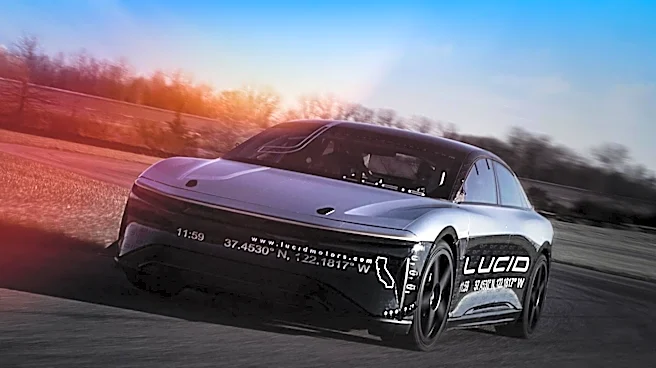
This performance was weaker than anticipated, leading to concerns about the company's operational efficiency and market position. Lucid Motors designs, engineers, and manufactures premium electric vehicles, including the Lucid Air luxury electric sedan and the Lucid Gravity electric SUV, focusing on range, energy efficiency, performance, and advanced in-car technology. The company also develops its own electric powertrains, battery systems, and software. This recent downturn in deliveries and production is part of an 'operating reset' aimed at reducing inventory and aligning output with current demand, which involves building fewer cars than delivered to shrink unsold vehicles and reduce associated carrying costs.
Why It's Important?
This weaker-than-expected performance from Lucid Group is important because it highlights the significant challenges faced by electric vehicle manufacturers in a competitive and capital-intensive market. The decline in deliveries and production indicates potential issues with demand, supply chain management, or manufacturing efficiency. For the U.S. automotive industry, Lucid's struggles underscore the difficulties new entrants face in scaling production and competing with established players like Tesla and traditional luxury brands that are also entering the EV space. The company's strategy of an 'operating reset' to reduce inventory, while potentially improving cash flow by lowering capital tied up in unsold vehicles, also means lower revenue recognition in the near term and reduced factory utilization, which can increase the cost per vehicle. This situation could impact investor confidence in the broader EV sector, especially for companies that are not yet profitable and rely heavily on external funding.
What's Next?
Lucid Group's immediate focus will likely be on successfully executing its 'operating reset' strategy to align production with demand and reduce inventory levels. This involves careful management of its manufacturing processes and supply chain to avoid further production shortfalls. The company will need to demonstrate a credible path to covering its costs, either through increased sales volume, further cost reductions, or securing new financing. Given the capital-intensive nature of the EV industry and Lucid's current financial position, the ability to raise additional capital without significantly diluting existing shareholders will be crucial. Analysts and investors will be closely watching future quarterly reports for signs of improvement in delivery and production figures, as well as progress on cost-cutting initiatives and cash flow management. The upcoming launch of Lucid's mid-sized EV platform in late 2026 is also a critical event, as it aims to target a broader customer base with lower-cost, higher-volume vehicles, which could significantly impact the company's future trajectory.
Beyond the Headlines
Beyond the immediate financial implications, Lucid Group's challenges reflect a broader trend in the electric vehicle market where the initial hype is giving way to the realities of mass production and market competition. The company's emphasis on premium vehicles, while offering advanced technology and performance, places it in a niche market with high price sensitivity and intense competition from both EV specialists and legacy automakers. The macro-economic environment, including the Federal Reserve's interest rate policies affecting financing costs for expensive vehicles and the cost of capital for companies, further complicates the landscape. Additionally, changes in federal tax credits for EVs and global trade tensions impacting battery materials and imported parts add layers of complexity. The rise of hybrid vehicles also presents a challenge, as it slows the growth in demand for pure electric cars, impacting companies like Lucid that exclusively offer battery electric vehicles. This situation highlights the need for robust business models, efficient manufacturing, and strong market differentiation for EV companies to thrive in the long term.