


What's Happening?
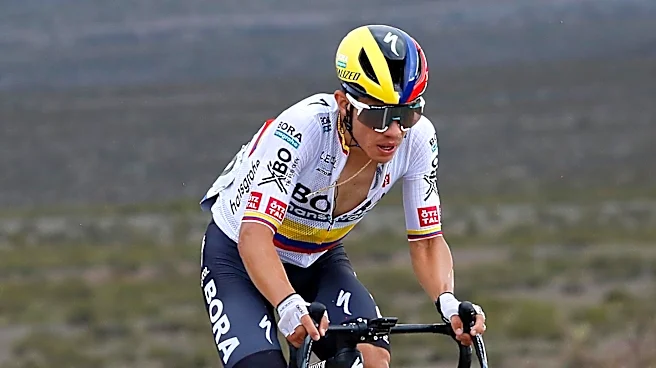
Colombian cycling, once a powerhouse in the Grand Tours, is experiencing a decline in success and participation at the highest levels. The country, which produced notable riders like Nairo Quintana and Egan Bernal, now faces challenges such as reduced
funding, lack of structured development programs, and fewer riders in the World Tour. Economic issues and a lack of long-term public policy have contributed to the decline. The Colombian Cycling Federation is criticized for not adapting to modern cycling demands, resulting in fewer young riders reaching the international stage.
Why It's Important?
The decline of Colombian cycling highlights the importance of sustained investment and development in sports. Colombia's past success in cycling brought national pride and international recognition, but the current challenges threaten to diminish its presence in the sport. The situation underscores the need for comprehensive development programs and consistent funding to nurture young talent. Without these, Colombia risks losing its competitive edge and the opportunity to inspire future generations of cyclists. The decline also reflects broader issues in sports management and policy, emphasizing the need for strategic planning and support.
Beyond the Headlines
The challenges facing Colombian cycling reveal deeper issues related to sports governance and economic stability. The lack of investment and development programs not only affects the sport but also limits opportunities for social mobility and international exposure for young athletes. The situation calls for a reevaluation of sports policies and the establishment of sustainable development models. Additionally, the decline serves as a cautionary tale for other nations, illustrating the consequences of neglecting sports infrastructure and support. Revitalizing Colombian cycling will require collaboration between government, private sector, and sports organizations to create a conducive environment for talent development.