




What's Happening?
Xcel Energy has submitted an Electric Customer Rate Stability Plan to the Minnesota Public Utilities Commission (PUC), requesting to maintain current electric base rates for 2027 and 2028. This proposal aims to avoid a traditional rate case by leveraging
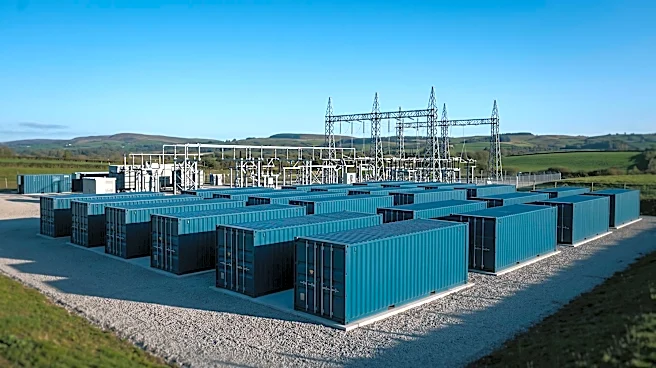
federal tax credits from upcoming battery energy storage projects and continuing to utilize existing cost-recovery mechanisms, often referred to as riders, which allow the company to collect specific costs outside of a full rate review. These riders cover expenses such as transmission lines and energy efficiency programs. If approved, Xcel Energy would postpone its next electric rate case until at least November 2028. The company plans to invest approximately $4.5 billion into Minnesota’s electric system over the next two years, with significant allocations for electric distribution, clean energy generation, battery storage, transmission upgrades, and the safe operation of nuclear plants. This includes $1.4 billion for electric distribution, $1.1 billion for clean energy and battery storage, $1 billion for transmission, $600 million for technology and services, and $500 million for nuclear plant operations.
Why It's Important?
This proposal is significant for Minnesota residents and businesses as it offers a period of stability and predictability in electric base rates, which can help manage household and operational budgets. By freezing base rates, Xcel Energy aims to mitigate the impact of rising energy costs on consumers, a critical concern given broader economic conditions. The company's strategy to utilize federal tax credits and existing cost-recovery tools demonstrates an effort to balance infrastructure investment with customer affordability. The planned $4.5 billion investment in Minnesota's electric system underscores a commitment to enhancing grid reliability, expanding clean energy infrastructure, and maintaining nuclear plant safety. This investment supports the state's energy transition goals, particularly in clean energy generation and battery storage, while also addressing the need for modernizing aging infrastructure. The decision by the PUC will set a precedent for how utility companies can manage rates and investments in a dynamic energy landscape, potentially influencing similar approaches in other states.
What's Next?
Xcel Energy has requested a decision from the Minnesota Public Utilities Commission (PUC) by January 2027 regarding its proposal to freeze electric base rates. If the PUC approves the plan, electric base rates for customers in Minnesota will remain unchanged for calendar years 2027 and 2028, and Xcel Energy will defer its next electric rate case filing until at least November 2028. The company will proceed with its planned $4.5 billion investment in Minnesota's electric system, focusing on distribution, clean energy, battery storage, transmission, technology, and nuclear plant operations. While base rates are proposed to be frozen, the impact of other charges, or riders, on customer bills remains to be seen, as the press release did not specify whether these separate charges could change. Customers facing difficulties with their bills are encouraged to contact Xcel Energy for assistance.
Beyond the Headlines
The proposal by Xcel Energy to freeze electric base rates in Minnesota highlights a broader trend in the utility sector to balance the need for significant infrastructure investments with public demand for stable and affordable energy. The reliance on federal tax credits for battery energy storage projects underscores the increasing role of government incentives in driving clean energy transitions and managing consumer costs. This approach could serve as a model for other utilities navigating similar challenges, particularly in states with ambitious clean energy goals. The continued use of cost-recovery mechanisms, or riders, also brings to light the complex structure of utility billing, where base rates are only one component of a customer's total energy cost. This situation could spark further discussions about transparency in utility pricing and the overall impact of various charges on consumers. Furthermore, the substantial investment in clean energy and grid modernization reflects a strategic shift towards a more resilient and sustainable energy future, aligning with national efforts to decarbonize the power sector and enhance energy security.