

What's Happening?
The mascara market is experiencing significant evolution, driven by increasing demand for eye makeup and advancements in packaging technology. According to Circana’s Larissa Jensen, Senior Vice President and Global Industry Advisor, the prestige eye makeup category
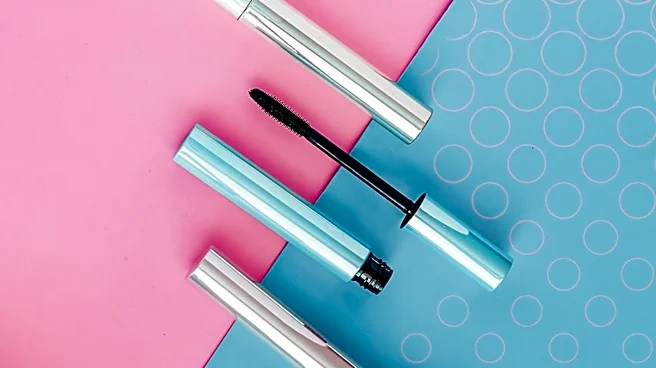
rebounded last year, with mascara sales contributing to this growth. Packaging suppliers are responding by offering a wider array of options, including new ways to mold, finish, and decorate mascara tubes. Innovations extend to mascara brushes, with Future Market Insights projecting the global mascara applicators market to reach $58.8 million by 2035. The trend of 'skinification' has also reached the lash category, with mascaras now offering treatment benefits like strengthening serums and conditioning primers. Brands are focusing on unique designs, such as Kiko Milano's collaboration with Just Cavalli for a limited-edition mascara with a zebra print, and Lancôme's Curl Goddess Mascara with a curvy, hourglass-shaped pack.
Why It's Important?
This evolution in mascara packaging is crucial for the U.S. beauty industry as it signifies a competitive landscape where differentiation is key. Brands are investing heavily in packaging aesthetics and functionality to capture consumer attention and enhance user experience. The integration of 'skinification' into mascara products reflects a broader consumer demand for multi-benefit cosmetics, pushing manufacturers to innovate beyond traditional makeup. Furthermore, the growing emphasis on sustainable packaging, including the use of PCR materials, mono-material designs, and refill systems, addresses increasing environmental concerns among U.S. consumers. This shift not only impacts product development and marketing strategies but also influences supply chains and manufacturing processes, as companies strive to meet both aesthetic and ecological standards. The focus on ergonomic designs and innovative opening mechanisms also improves accessibility, benefiting a wider range of consumers.
What's Next?
The mascara market is expected to continue its trajectory of innovation, with further advancements in packaging materials, brush technologies, and formula integration. Suppliers will likely introduce more eco-friendly solutions, such as advanced PCR materials and fully recyclable mono-material packs, to meet sustainability goals. Brands will continue to explore unique collaborations and design elements to create distinctive products that stand out on shelves. The trend of 'lash care meets mascara' is anticipated to expand, with more products offering combined makeup and treatment benefits. Additionally, the development of user-friendly packaging, such as one-handed opening systems, will likely become more prevalent, enhancing the overall consumer experience. The industry will also see continued investment in research and development to create brushes that deliver specific lash effects, catering to diverse consumer preferences.
Beyond the Headlines
Beyond the immediate market trends, the innovations in mascara packaging reflect deeper shifts in consumer values and technological capabilities. The demand for sustainable packaging highlights a growing environmental consciousness that is reshaping the entire beauty industry, pushing brands towards more responsible manufacturing and consumption practices. The focus on 'skinification' and lash care signifies a holistic approach to beauty, where health and wellness are integrated with cosmetic enhancement. This could lead to a redefinition of beauty standards, emphasizing natural lash health over purely artificial effects. The development of accessible packaging designs, such as Brivaplast's Click 'n Go system, also points to a broader societal movement towards inclusive design, ensuring products are usable by individuals with varying physical abilities. These underlying currents suggest a future where beauty products are not only effective and aesthetically pleasing but also ethical, sustainable, and universally accessible.