






What's Happening?
ASML, a Dutch electronics company and the world's leading supplier of lithography systems, announced plans to increase its Japanese workforce from 500 to 700 by 2030. This expansion is aimed at providing enhanced support to major chipmakers, including
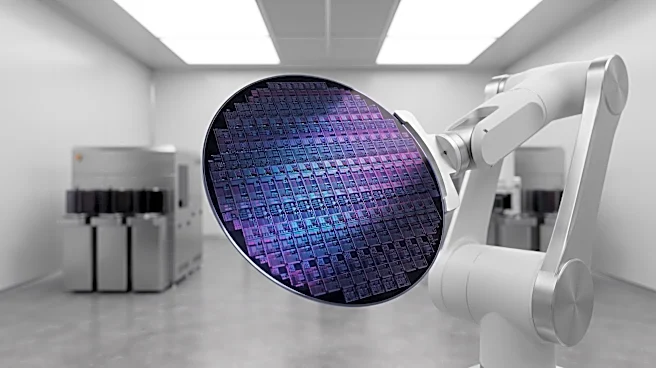
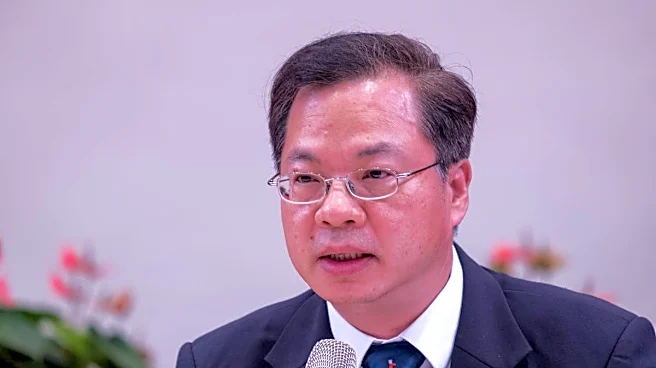
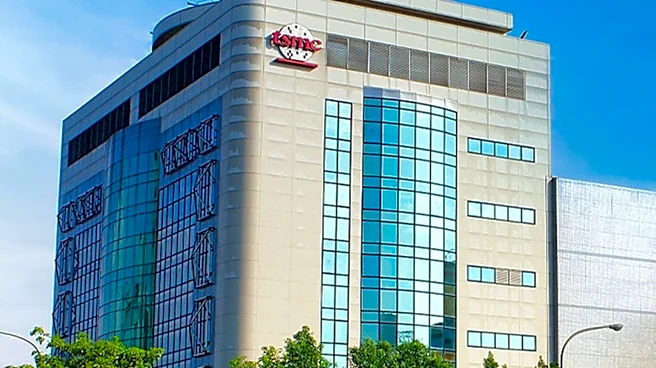
Taiwan Semiconductor Manufacturing Company (TSMC) and Japan's Rapidus. ASML Japan President Fujiwara Shojiro stated that new hires will be strategically located closer to customer facilities to ensure faster and more efficient assistance. The company opened an office in Hokkaido in 2024 to support Rapidus's 2 nm chip production, which is expected to begin in 2027. Additionally, ASML plans to station workers in Kumamoto prefecture, where TSMC is constructing its second fabrication plant. ASML is the sole manufacturer of extreme ultraviolet (EUV) machines, critical for advanced chip production, and its sales in Japan reached NT$44.34 billion (US$1.4 billion) in 2025, supplying equipment to TSMC, Rapidus, and Micron Technology's Hiroshima plant.
Why It's Important?
This workforce expansion by ASML in Japan is crucial for the global semiconductor industry, particularly for the U.S., given the interconnectedness of the supply chain. The U.S. relies heavily on advanced semiconductors produced by companies like TSMC for various critical technologies, including artificial intelligence, defense systems, and consumer electronics. By bolstering support for TSMC and Rapidus, ASML is directly contributing to the stability and advancement of leading-edge chip manufacturing. This move helps ensure a more robust and resilient supply chain, mitigating potential disruptions that could impact U.S. technology sectors. Furthermore, the development of 2 nm chips by Rapidus, supported by ASML, signifies a push towards next-generation semiconductor technology, which is vital for maintaining technological competitiveness and national security interests for the U.S. The increased localized support will also help accelerate production timelines and improve efficiency, indirectly benefiting U.S. companies that depend on these advanced chips.
What's Next?
ASML's workforce expansion will continue through 2030, with new personnel being deployed to key locations like Hokkaido and Kumamoto to support the ongoing and upcoming projects of Rapidus and TSMC. Rapidus is set to begin 2 nm chip production in 2027, and TSMC's second fab in Kumamoto is under construction, with a partnership with Sony for advanced image sensor chips slated for production in 2029. This sustained support from ASML is expected to facilitate the timely ramp-up and efficient operation of these advanced manufacturing facilities. The increased presence of ASML engineers will likely lead to closer collaboration and faster problem-solving, which is essential for the complex and highly technical process of semiconductor manufacturing. This strategic move by ASML underscores a long-term commitment to supporting its major clients in Japan, ensuring the continuous advancement and supply of critical semiconductor components.
Beyond the Headlines
The expansion highlights the increasing strategic importance of localized support in the highly specialized semiconductor industry. As chip manufacturing becomes more complex and geographically dispersed, having on-the-ground technical expertise becomes a critical differentiator. This trend could lead to other key equipment suppliers adopting similar strategies, further decentralizing support networks and potentially fostering regional innovation hubs. The move also reflects a broader geopolitical shift towards strengthening domestic and allied semiconductor production capabilities, reducing reliance on single points of failure in the global supply chain. For the U.S., this means a more diversified and secure source of advanced chips, which is vital for economic stability and national security in an era of increasing technological competition. The emphasis on proximity and rapid response also suggests a future where equipment maintenance and optimization are integrated more seamlessly into the manufacturing process, driving further efficiencies and technological breakthroughs.