






What's Happening?
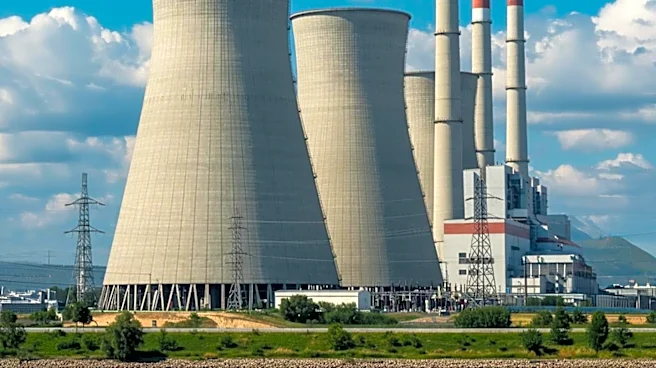
Indiana's utility regulators are confronting a significant shift in their mandate, moving from concerns about overbuilding power infrastructure to the urgent need for rapid development. This change is driven by a dramatic increase in forecasted electricity
demand, primarily from data centers and new manufacturing facilities. In 2022, utilities projected 24 gigawatts of new peak electricity demand over five years; by 2025, this forecast surged to 166 gigawatts, with data centers accounting for over half of this growth. This contrasts sharply with the period before 2018, when American electricity demand grew at less than 1% annually for two decades, and Indiana's focus was on phasing out aging coal plants. The Indiana Utility Regulatory Commission's role now involves balancing the need for rapid construction with the duty to ensure fair rates for Hoosier households and businesses, requiring utilities to prove the necessity of new projects.
Why It's Important?
This shift in utility regulation is critical for Indiana's economic future. The availability of reliable and sufficient power has become a primary factor for attracting new investments, particularly from energy-intensive industries like data centers and manufacturing. If Indiana cannot meet this escalating demand, it risks losing out on significant economic opportunities and job creation. The challenge for regulators is to facilitate rapid infrastructure development without burdening consumers with unnecessary costs or speculative projects. The principle of 'cost causation' is vital here, ensuring that large new customers bear the costs of serving them, backed by long-term commitments, to protect existing households and businesses from undue rate increases. The increased public scrutiny of utility cases also highlights the growing importance of transparency and evidence-based decision-making in regulatory processes.
What's Next?
The Indiana Utility Regulatory Commission will continue to face pressure to approve new power generation and transmission projects at an accelerated pace. The process will require utilities to present strong evidence of need, subject to sworn testimony and cross-examination, with the state's consumer advocate representing customer interests. Forecasts for electricity demand are expected to continue changing, necessitating a flexible yet rigorous regulatory approach. The commission's decisions will directly impact the state's ability to attract and retain businesses, as well as the electricity rates paid by all Hoosiers. The ongoing challenge will be to balance the urgency of economic growth with the long-term interests of consumers and the need for sustainable energy solutions.
Beyond the Headlines
The situation in Indiana reflects a broader national trend where states are grappling with rapidly increasing electricity demand driven by technological advancements and industrial reshoring. This development raises fundamental questions about energy policy, infrastructure planning, and the role of regulation in a dynamic economic environment. It also highlights the tension between economic development goals and consumer protection. The need for rapid power expansion could lead to increased investment in various energy sources, potentially accelerating the transition away from older, less efficient plants, but also posing challenges for grid stability and environmental impact. The public's heightened attention to utility decisions suggests a growing awareness of how energy policy directly affects daily life and economic prosperity, pushing regulators towards greater accountability and transparency.