





What's Happening?
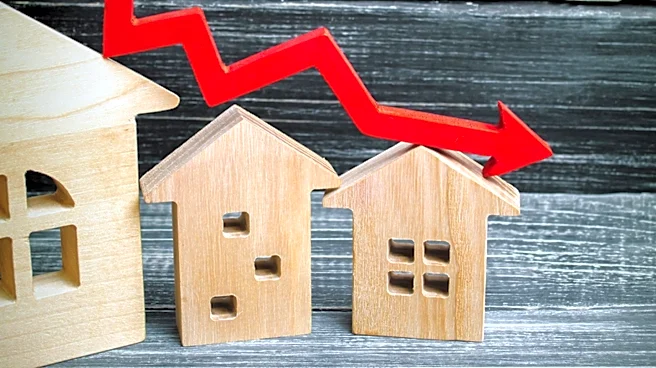
The U.S. housing market is experiencing a significant downturn in many areas, characterized by record-low pending home sales and a 14-year low in builder confidence, according to Reventure. In September 2026, the National Association of Realtors’ Pending
Home Sales Index dropped to its lowest reading since 2001, indicating a substantial decline in buyer demand. Concurrently, the NAHB/Wells Fargo Housing Market Index fell to 29 out of 100 in October, a level not seen since June 2012. This decline is largely attributed to mortgage rates climbing above 7%, with the 30-year fixed rate averaging 7.40% in mid-October, making homeownership unaffordable for many. As a result, builders are responding by cutting prices, offering incentives, and reducing new construction. However, this trend is not uniform across the nation, leading to a 'K-shaped' market where prices continue to rise in wealthy, supply-constrained suburbs near major job centers like New York, San Francisco, and Chicago, while falling in more affordable markets in the South and West.
Why It's Important?
This K-shaped housing market has significant implications for various stakeholders across the U.S. For potential homebuyers in the South and West, the falling prices and increased inventory could present opportunities for more favorable purchasing conditions and greater negotiating power. Conversely, homeowners in these regions may see a decrease in their property values, impacting their equity and financial planning. In contrast, buyers in the appreciating markets of New York, San Francisco, and Chicago will continue to face high prices and strong competition, while homeowners in these areas will benefit from continued appreciation. The overall market dynamic also affects the construction industry, with builders in declining markets pulling back on new projects, potentially leading to job losses and reduced economic activity in those regions. The Federal Reserve's decision to raise benchmark rates, despite weakening housing demand, adds another layer of complexity, as higher rates further strain an already struggling market, potentially exacerbating the downturn in vulnerable areas.
What's Next?
Looking ahead to 2027, Reventure forecasts continued price declines in much of the South and West, particularly in states with significant inventory surpluses like Tennessee, Colorado, and Washington. These regions are characterized by heavy new construction, lower incomes relative to prices, and buyers who are more reliant on mortgages. Conversely, wealthy, built-out suburbs near major job centers such as San Francisco County, Western Connecticut, and Westchester County are expected to continue experiencing home price growth. The Federal Reserve's monetary policy will play a crucial role; if inflation cools and the Fed reverses course on rate hikes, it could bring some buyers back into the market. However, if weak demand persists and rates remain high or increase further, the downturn in oversupplied markets could deepen. Buyers in these declining markets are advised to leverage their increased negotiating power, while those in appreciating markets will likely continue to face strong competition.
Beyond the Headlines
The emergence of a K-shaped housing market highlights deeper economic and social stratification within the U.S. The divergence in housing fortunes underscores the growing wealth gap, where affluent areas with limited supply and high-income earners remain resilient, while more affordable, mortgage-dependent markets struggle. This trend could exacerbate regional inequalities, making it harder for individuals and families in the declining markets to build wealth through homeownership. Furthermore, the reliance on rising rents as a key indicator of justified price growth suggests a fundamental shift in market dynamics, where speculative buying is less prevalent in stable markets. The historical context of the Fed raising rates into a weak housing market, reminiscent of periods before major recessions, raises concerns about broader economic stability, even if current banking systems and homeowner equity are more robust than in the past. This situation also brings into focus the ethical considerations for policymakers in balancing inflation control with the potential for widespread housing market distress.