



What's Happening?
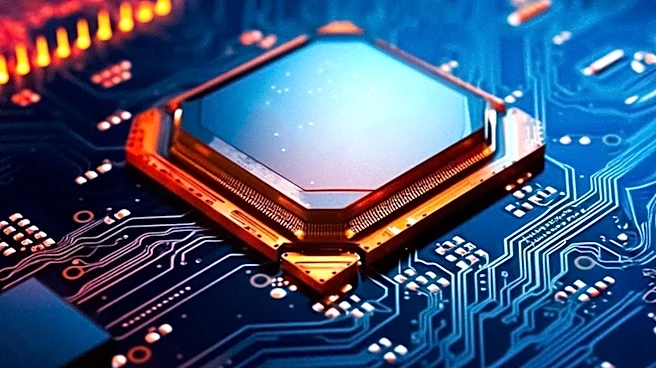
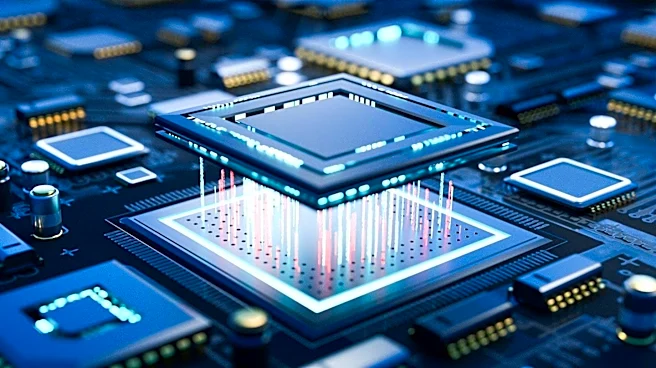
Japan's Fujitsu has announced its re-entry into the commercial semiconductor market with its independently developed AI CPU, 'Monaka.' The company plans to begin selling this chip to the U.S. and Asia-Pacific markets as early as 2027. The 'Monaka' chip is manufactured
by Taiwan Semiconductor Manufacturing (TSMC) using its 2nm process technology. Super Micro Computer, a U.S. server giant, has already been secured as a customer for the 'Monaka' chip. This move signifies Fujitsu's first formal external sale of advanced semiconductors since it exited chip production in the 2010s. The 'Monaka' chip features a three-dimensional chiplet architecture, with compute cores built on the 2nm node and technology derived from the Fugaku supercomputer. Fujitsu aims to achieve cumulative CPU revenue of approximately $1.6 billion and sell 60,000 AI servers by fiscal 2030. Following the announcement, Fujitsu shares surged over 5%, reflecting market optimism regarding its return to the AI chip export market.
Why It's Important?
Fujitsu's re-entry into the commercial semiconductor market, particularly with an advanced AI chip like 'Monaka,' holds significant implications for the U.S. technology sector and global supply chains. The partnership with U.S. server giant Super Micro Computer ensures a direct channel for this new technology into the American market, potentially enhancing the capabilities of U.S. cloud service providers and data centers. The use of TSMC's cutting-edge 2nm process for manufacturing highlights the ongoing reliance on advanced fabrication capabilities, which are predominantly located in Asia. This development could intensify competition within the AI chip market, benefiting U.S. businesses by offering more diverse and potentially innovative options for their AI infrastructure. Furthermore, Fujitsu's strategic decision to target U.S. and Asia-Pacific markets underscores the critical role these regions play in the global AI landscape, influencing investment and technological advancements in the U.S. semiconductor industry.
What's Next?
Fujitsu plans to expand its customer base beyond Super Micro Computer by actively pitching its 'Monaka' AI chip to major U.S. cloud service providers. The company also intends to sell 'Monaka'-powered AI servers both domestically in Japan and internationally, aiming for 60,000 units by fiscal 2030. Currently, 24 financial and telecommunications companies are validating 'Monaka's' performance through test units, with over 40 additional enterprises in discussions for adoption. Looking further ahead, Fujitsu anticipates outsourcing the production of its most advanced 1.4nm products, slated for supply starting in 2029, to Japanese chip manufacturer Rapidus. This indicates a dual-track supply chain strategy involving both TSMC and Rapidus for future advanced process nodes. The market will be watching for further announcements regarding new customer acquisitions and the performance of 'Monaka' in real-world applications.
Beyond the Headlines
Fujitsu's return to the commercial semiconductor market with 'Monaka' signifies a broader trend of established technology companies re-evaluating and re-entering high-growth sectors like AI. This move is not just about a new product; it represents a strategic shift for Fujitsu, leveraging its deep R&D heritage from projects like the Fugaku supercomputer. The emphasis on a three-dimensional chiplet architecture and the selective application of 2nm process technology to optimize cost and energy efficiency reflect an evolving approach to semiconductor design, prioritizing performance where it matters most while managing overall production expenses. This could set a precedent for other companies looking to innovate in advanced chip manufacturing. The collaboration with TSMC and the potential future partnership with Rapidus also highlight the increasing complexity and globalization of semiconductor supply chains, where strategic alliances are crucial for accessing cutting-edge fabrication capabilities and ensuring market competitiveness.