








What's Happening?
Machine learning is transforming the field of geology by enabling the discovery of hidden ore deposits that traditional methods often miss. By processing vast amounts of geophysical, geochemical, and geological data, AI models can identify mineral deposits buried
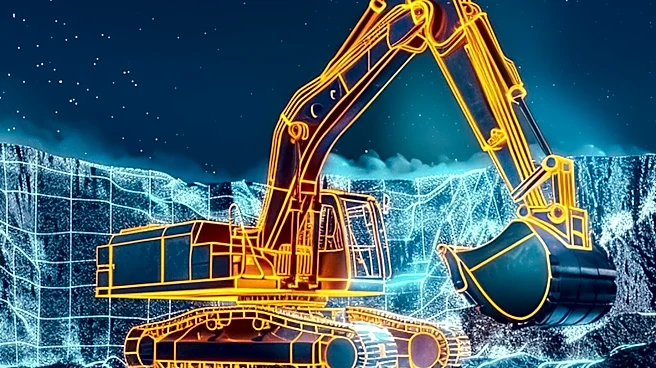
deep beneath the Earth's surface. Companies like KoBold Metals are at the forefront, using proprietary datasets to create probabilistic maps that highlight potential ore locations. This approach has already advanced significant projects, such as the $2.3 billion Mingomba copper project in Zambia. AI models are also being used to refine exploration techniques, integrating ambient noise tomography to create detailed subsurface images.
Why It's Important?
The use of AI in mineral exploration represents a significant advancement in the industry, offering a more efficient and accurate method of identifying valuable resources. This technology reduces the reliance on traditional, labor-intensive exploration methods, potentially lowering costs and increasing the success rate of finding commercially viable deposits. The ability to process and analyze large datasets allows for more informed decision-making and strategic planning in exploration activities. As demand for critical minerals like copper and lithium grows, AI-driven exploration could play a crucial role in meeting global supply needs.
What's Next?
The integration of AI and machine learning in mineral exploration is expected to continue expanding, with more companies adopting these technologies to enhance their exploration capabilities. Future developments may include further refinement of AI models and the incorporation of additional data sources to improve accuracy. As the technology evolves, it could lead to new discoveries and the development of previously untapped mineral resources. The industry may also see increased collaboration between technology companies and mining firms to leverage AI's full potential.