




What's Happening?
The Village Dallas, a 300-acre master-planned community in Dallas, has announced the opening of Terraces at the Drey. This new addition is an extension of The Village’s original Drey Hotel and introduces 46 individualized rooms and suites. The Terraces at the Drey project
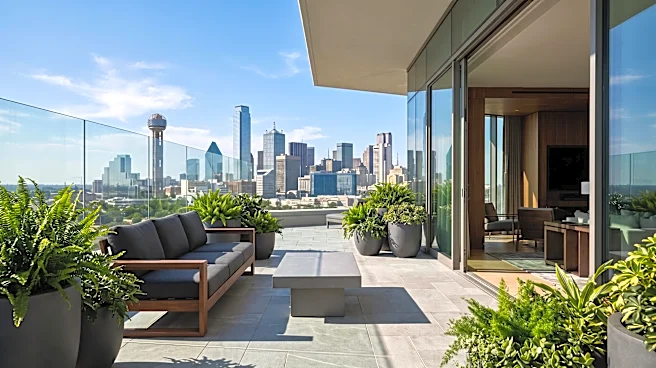
involved the adaptive reuse of a former office building. Among its offerings are seven terrace suites with private open-air spaces and two signature corner suites featuring outdoor living areas with bespoke furnishings, greenery, and skyline views. Jon Gray, managing director of The Village Dallas, emphasized that Terraces at the Drey represents an evolution in the community's offerings, aiming to provide an elevated experience that remains connected to the vibrant energy of The Village. The design, a collaboration with James Carry Design Studio and Ink + Oro, draws inspiration from the natural landscape and the community's dynamic atmosphere, incorporating wood-forward materials, abundant greenery, and natural light. The property's name, inspired by a squirrel's treetop nest (drey), reflects its elevated terraces and connection to the surrounding environment. Additionally, a 14-seat omakase restaurant named Kobako is slated to open at the property in 2027.
Why It's Important?
The expansion of The Village Dallas with Terraces at the Drey signifies a notable development in the U.S. hospitality and real estate sectors, particularly in the Dallas market. This project highlights a growing trend of adaptive reuse in urban development, transforming existing structures like office buildings into new hospitality venues. This approach can contribute to urban revitalization, sustainable development by reducing new construction, and the creation of unique guest experiences. For the Dallas economy, this expansion is expected to boost local tourism and provide new employment opportunities in the hospitality sector. The emphasis on creating a connected, experiential stay, rather than just accommodation, caters to evolving consumer preferences for immersive travel and living experiences. The integration of residential, dining, and wellness amenities within a master-planned community like The Village Dallas could set a precedent for future mixed-use developments, influencing urban planning and lifestyle offerings across the country. The planned opening of a high-end restaurant further diversifies the local culinary scene, attracting both residents and visitors.
What's Next?
Following the opening of Terraces at the Drey, the immediate next step for The Village Dallas will be to integrate these new hospitality offerings into the broader community experience. The management will likely focus on marketing the unique aspects of the new suites and amenities to attract guests. The upcoming opening of Kobako, the 14-seat omakase restaurant, in 2027 will be a significant milestone, requiring further planning and execution. This will involve hiring staff, finalizing the restaurant's concept, and promoting it to a discerning clientele. The success of Terraces at the Drey could influence future development phases within The Village Dallas, potentially leading to further expansions or new projects that align with the community's vision of integrated living and experiential hospitality. Other developers in the U.S. may observe the performance of this adaptive reuse project as a model for similar initiatives in their respective markets, particularly in cities with a surplus of older commercial buildings.
Beyond the Headlines
The development of Terraces at the Drey within The Village Dallas reflects a broader societal shift towards integrated living and experiential consumption. Beyond simply providing lodging, this project aims to foster a sense of community and connection, blurring the lines between residential, leisure, and hospitality spaces. This trend suggests a re-evaluation of urban design, where convenience and access to diverse amenities are paramount. Ethically, adaptive reuse projects like this can be seen as a more sustainable approach to development, reducing the environmental impact associated with new construction and preserving existing urban fabric. Culturally, the emphasis on unique, curated experiences, such as the omakase restaurant and bespoke furnishings, caters to a demographic that values authenticity and personalized luxury. This development also highlights the increasing importance of placemaking in real estate, where the creation of vibrant, self-contained communities becomes a key differentiator in a competitive market. The long-term impact could be a transformation of how urban spaces are conceived and utilized, moving towards more holistic and interconnected environments.