




What's Happening?
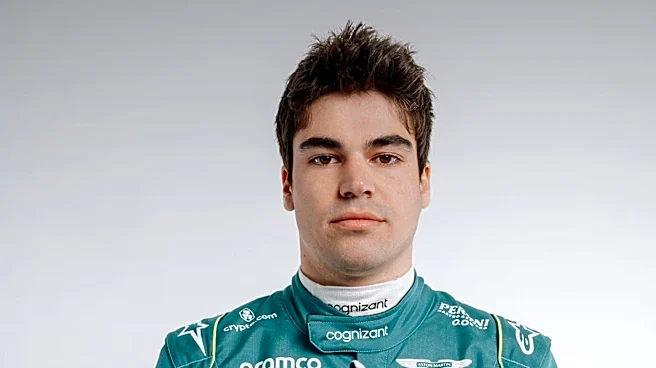
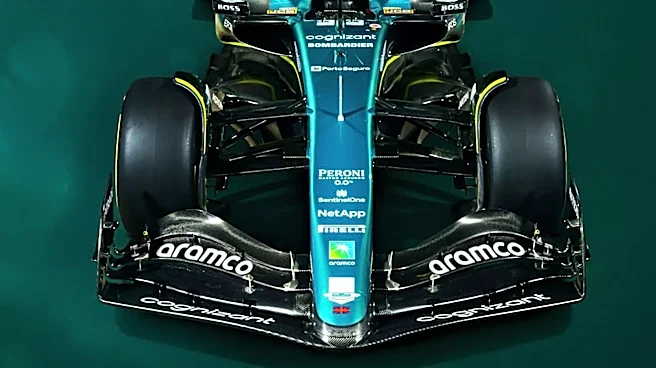
The Fédération Internationale de l'Automobile (FIA) has confirmed a 10-place grid penalty for Aston Martin driver Lance Stroll at the upcoming Las Vegas Grand Prix. This penalty stems from Stroll exceeding the permitted number of engine components for the F1
2026 season. Specifically, Stroll has moved to a ninth energy store, six more than the three allowed for the entire season, and an eighth control electronics unit, surpassing the limit of three per season. These two violations collectively result in the 10-place grid drop. Stroll, who has yet to score a point in the 2026 season, finished 11th in the second practice session (FP2) in Las Vegas. The Aston Martin team has faced significant reliability issues throughout the F1 2026 season, which is their first year in partnership with Honda, limiting them to only seven points, all scored by his teammate Fernando Alonso.
Why It's Important?
This penalty significantly impacts Lance Stroll's performance and Aston Martin's strategy for the Las Vegas Grand Prix, a high-profile event in the U.S. racing calendar. Starting 10 places further back on the grid will make it considerably more challenging for Stroll to compete for points, especially given his team's ongoing reliability problems and power deficit. The incident highlights the stringent regulations in Formula 1 regarding engine component usage, designed to control costs and ensure fair competition. For Aston Martin, this penalty underscores the difficulties they are experiencing in their new partnership with Honda, as reliability issues continue to plague their season. The team's struggle to score points, with Stroll retiring from 13 of 20 races, indicates a deeper technical challenge that could affect their standing and future competitiveness in the sport.
What's Next?
Lance Stroll will start the Las Vegas Grand Prix 10 positions lower than his qualifying result due to the confirmed penalty. This will likely force Aston Martin to adjust their race strategy to mitigate the impact of the grid drop. Stroll has also expressed concerns about the team's power deficit on the long straights of the Las Vegas circuit, suggesting it could be a 'tough weekend' and even 'almost dangerous' due to the speed differential. The team will need to focus on optimizing their car setup and race management to try and salvage any potential points. The ongoing reliability issues with the Honda power unit will remain a critical area of focus for Aston Martin as they continue through the F1 2026 season and prepare for future races.
Beyond the Headlines
The recurring engine component penalties and reliability issues faced by Aston Martin and Lance Stroll point to broader challenges within Formula 1's technical regulations and the demanding nature of modern F1 power units. The strict limits on component usage, while intended to promote sustainability and cost control, can severely penalize teams experiencing technical difficulties. This situation could spark further discussions within the FIA and F1 teams about the balance between regulatory enforcement and supporting competitive racing, especially for new partnerships like Aston Martin's with Honda. The perceived 'danger' due to power deficits on long straights, as articulated by Stroll, also raises safety considerations that could prompt a review of track design in relation to car performance disparities, particularly in high-speed urban circuits like Las Vegas.