





What's Happening?
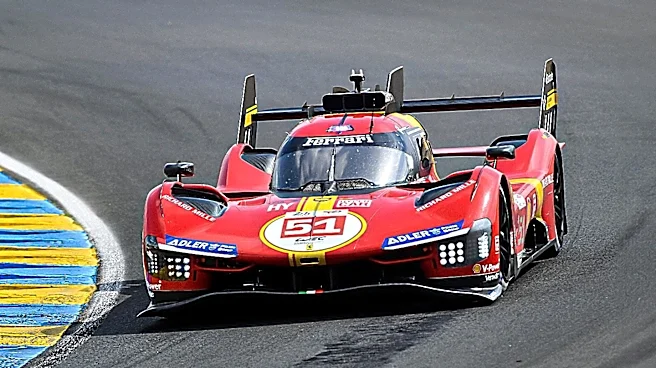
The No.50 Ferrari squad achieved an unexpected victory at the Circuit of the Americas in the WEC Lone Star Le Mans race. This win came after the No.7 Toyota, which had been leading, experienced a hydraulic problem with only 15 minutes remaining, forcing
it into the garage and out of contention. The race was marked by unpredictable weather, with heavy rain affecting parts of the track before the start, leading to extra formation laps. Throughout the event, various teams, including Cadillac and Alpine, contended for the lead, and different pit strategies kept the outcome uncertain. In the LMGT3 category, the No.27 Heart of Racing Aston Martin dominated, securing a victory and contributing to a double podium finish for Aston Martin. Penalties also played a role, with the No.8 Toyota receiving a drive-through penalty for a pit stop infringement and the leading LMGT3 Mercedes also penalized for a Virtual Safety Car infringement.
Why It's Important?
This surprise victory for Ferrari at the Circuit of the Americas, a U.S. venue, highlights the unpredictable nature of endurance racing and the critical role of reliability, especially in the final stages of a competition. For Ferrari, this win provides a significant boost in the World Endurance Championship (WEC), demonstrating their competitive edge and strategic prowess against strong rivals like Toyota. The event's outcome can influence team morale, sponsor interest, and future investment in racing programs. For the U.S. motorsports scene, hosting such a dramatic and high-stakes international race at the Circuit of the Americas reinforces its status as a premier racing destination, attracting global attention and potentially increasing fan engagement and tourism. The challenges posed by weather conditions also underscore the adaptability required from teams and drivers, adding an extra layer of excitement and technical complexity to the sport.
What's Next?
The World Endurance Championship circuit will continue with its next round scheduled to take place in Fuji in just a couple of weeks. Teams will quickly analyze their performances from the Lone Star Le Mans, particularly focusing on reliability issues that affected front-runners like Toyota. Ferrari will aim to carry the momentum from their unexpected victory into the upcoming races, while Toyota will be looking to address the hydraulic problems that cost them a win. Competitors in both the Hypercar and LMGT3 categories will refine their strategies and car setups for the different track conditions and demands of the Fuji circuit. The close competition and strategic battles witnessed in Texas suggest that the remainder of the WEC season will continue to be highly contested, with teams vying for crucial championship points.
Beyond the Headlines
The dramatic conclusion of the WEC Lone Star Le Mans race, where a leading car retired due to mechanical failure in the final minutes, underscores the inherent fragility and high-stakes nature of advanced automotive engineering in endurance racing. Beyond the immediate sporting implications, such events serve as real-world testbeds for automotive technologies, pushing the boundaries of material science, aerodynamics, and powertrain reliability. The lessons learned from these high-stress environments can eventually trickle down into consumer automotive innovations, improving vehicle safety, efficiency, and performance. Furthermore, the intense competition and the need for split-second strategic decisions by race engineers and drivers highlight the blend of human skill and technological sophistication that defines modern motorsports, captivating a global audience and inspiring future generations of engineers and athletes.