







What's Happening?
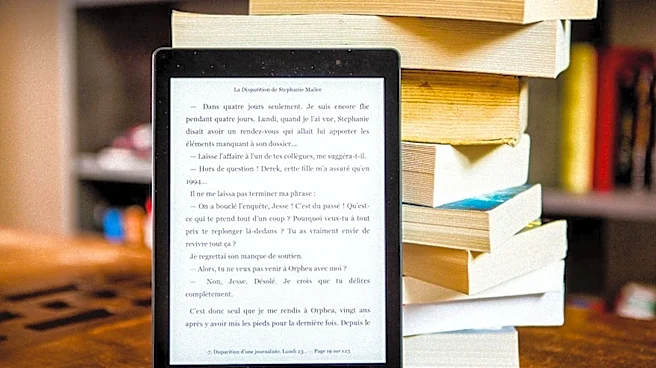
A persistent debate questions the legitimacy of reading through audiobooks and e-books compared to traditional print. Critics often argue that consuming content visually from a physical book is the only 'real' way to read, dismissing audio and digital
formats as less authentic or meaningful. This perspective suggests that the effort involved in visual reading makes it more worthy. However, proponents of audiobooks and e-books highlight the accessibility and convenience these formats offer. For individuals with visual impairments, dyslexia, ADHD, brain injuries, or those who travel frequently or have limited access to physical books, digital and audio formats provide crucial access to literature and information. The argument emphasizes that the value of a book lies in its content—the story, information, and ideas—rather than the medium through which it is consumed. Many out-of-copyright books are also freely available online, making e-readers an affordable option for those with limited cash or closed local libraries.
Why It's Important?
This discussion is important because it touches upon issues of accessibility, inclusivity, and the evolving nature of literacy in the digital age. By gatekeeping the definition of 'reading' to only include physical books, society risks excluding a significant portion of the population who rely on alternative formats due to disabilities, financial constraints, or lifestyle choices. This exclusionary stance can perpetuate intellectual snobbery and disablism, undermining the fundamental purpose of books, which is to disseminate ideas, stories, and knowledge. Embracing diverse reading formats ensures that more people can engage with literature, learn, and enrich their lives, fostering a more inclusive and equitable intellectual landscape. The availability of free and accessible e-books also plays a role in bridging educational and informational gaps for underserved communities.
What's Next?
The ongoing evolution of technology will likely continue to challenge traditional notions of reading. As digital platforms and audio content become even more sophisticated and integrated into daily life, the debate around what constitutes 'real reading' may intensify or, conversely, become increasingly irrelevant. Libraries and educational institutions will likely continue to expand their digital offerings to meet diverse user needs, further normalizing e-books and audiobooks. The focus may shift from the medium to the cognitive engagement and comprehension achieved, regardless of format. Advocacy for accessibility in publishing will also likely grow, pushing for more content to be available in multiple formats to cater to a wider audience, including those with various impairments.
Beyond the Headlines
Beyond the surface-level debate, this issue reflects deeper societal attitudes towards technology, tradition, and intellectual value. The resistance to digital and audio reading formats can be seen as a form of nostalgia for a bygone era, where physical books held an almost sacred status. This perspective often overlooks the practical benefits and democratizing potential of new technologies. The core of the argument lies in whether the 'effort' of reading is intrinsically tied to the physical act of turning pages, or if the mental processing of information, regardless of input method, is what truly defines reading. Recognizing the validity of all reading formats encourages a more adaptive and inclusive approach to education and culture, acknowledging that the human brain processes information in various ways and that accessibility should be prioritized over rigid adherence to traditional methods.