



What's Happening?
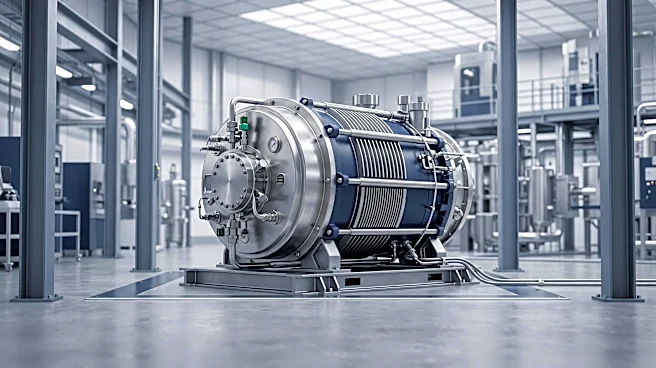
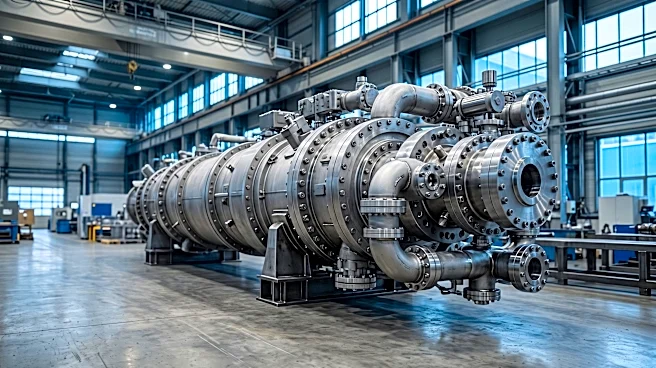
NuScale Power (NYSE:SMR) has advanced its power module manufacturing by entering First Article production for the upper reactor coolant system with its partner, Doosan. This significant step involves the production of the component at Doosan's Korean
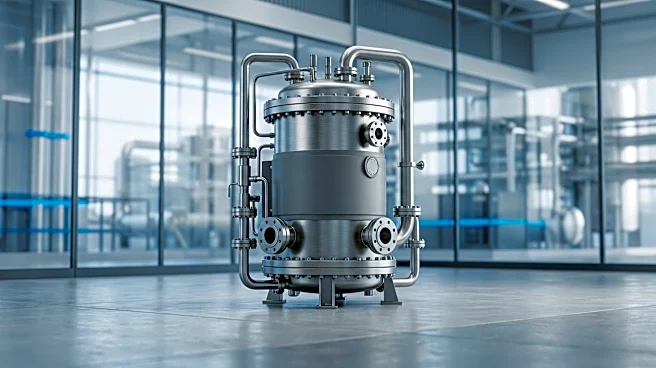
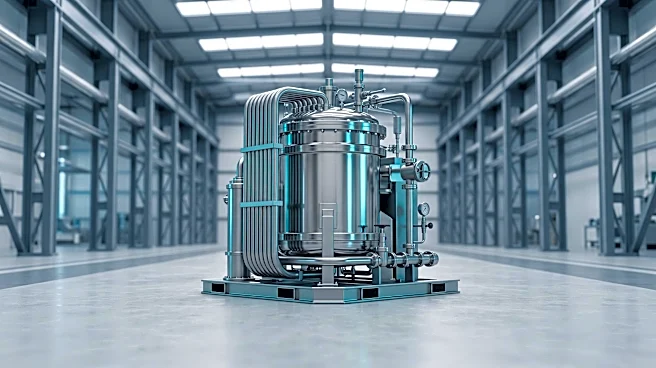
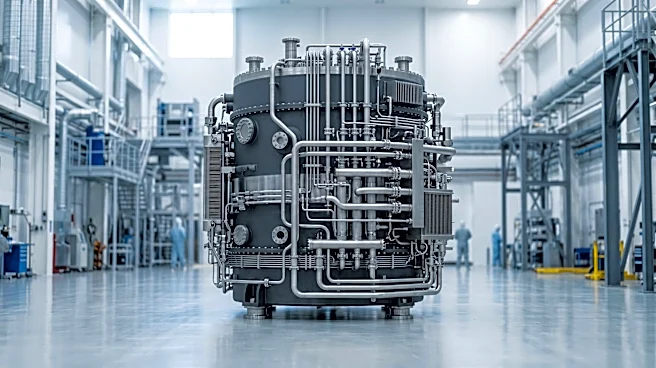
facilities, marking a transition from design and licensing to tangible manufacturing. First Article status indicates the creation of production-intent hardware, validating the manufacturing process rather than just producing prototypes. This move is a culmination of years of collaboration and design work between the two companies, with Doosan also being a financial backer of NuScale. The power module developed by NuScale integrates the reactor, steam generation, and containment into a factory-built unit, designed for scalable deployment.
Why It's Important?
This development is crucial for the modular nuclear sector as it demonstrates the industrialization of new nuclear technology. The shift from theoretical designs to actual hardware production addresses a key concern among skeptics regarding the feasibility and scalability of modular reactors. By proving the manufacturing route for critical components like the upper reactor coolant system, NuScale is validating its cost thesis, which relies on standardization and factory learning curves to reduce the historically high costs of nuclear power. The involvement of a world-renowned nuclear forger like Doosan, with its deep workforce and active supply chains, provides a significant advantage, especially given the limited heavy-fabrication capacity in Western countries. This manufacturing progress directly supports the deployability of NuScale's technology, which already holds regulatory design approval in the United States.
What's Next?
The initiation of First Article production will lead to the validation of tooling, welding procedures, and quality systems, effectively retiring manufacturing risks before large-scale orders are placed. Lessons learned from this initial production phase will be incorporated into subsequent units, aiming to optimize costs and schedules. While component costs at this stage inform future series economics, the full impact of the learning curve is yet to be realized. Future updates from the partnership are expected to detail further fabrication progress. The success of these manufacturing milestones, alongside customer project commitments and deployment scheduling, will be critical in converting the modular sector's interest into actual operational plants, with government programs in allied markets providing early deployment support.
Beyond the Headlines
This manufacturing milestone has broader implications for energy transitions and energy security. The ability to factory-fabricate nuclear power modules could revolutionize the deployment speed and cost-effectiveness of nuclear energy, making it a more viable option for decarbonization and meeting the growing power demands of sectors like data centers. The emphasis on standardization and factory production aims to move nuclear power away from its bespoke, project-by-project history towards a more industrialized model. This shift could also enhance supply chain resilience for nuclear components, reducing reliance on single-source or geographically concentrated manufacturing. The success of NuScale's approach could set a precedent for other advanced nuclear technologies, influencing global energy policy and investment in small modular reactors (SMRs) as a key component of future energy grids.