






What's Happening?
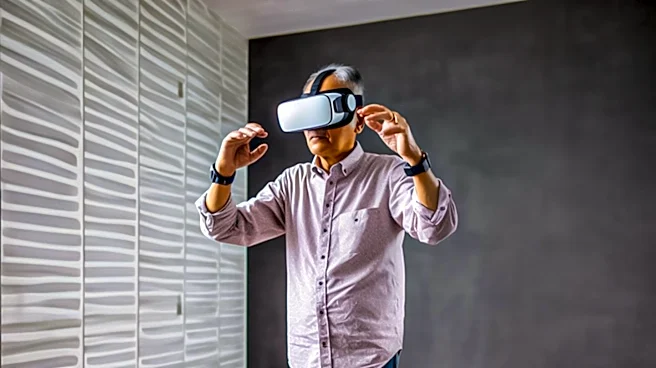
Augmented reality (AR) fitting rooms are being increasingly adopted by major fashion retailers to enhance the online shopping experience. These AR tools allow users to virtually try on clothing, shoes, and bags, providing a more interactive and engaging
shopping experience. The WEARFITS platform offers a comprehensive virtual try-on solution for footwear and accessory brands, featuring photo to 3D conversion, automatic model positioning, occlusion controls, advanced masking, QR codes, and API integration. This technology aims to reduce product returns and improve customer confidence by allowing users to see how items will fit and look on them before making a purchase. Additionally, body-scanning apps and avatar-based fit tools are being used to address the longstanding issue of sizing in fashion, providing more accurate fit information and reducing the mismatch between size labels and actual body measurements.
Why It's Important?
The integration of AR fitting rooms in online retail is significant as it addresses one of the major challenges in e-commerce: the inability to try on products before purchase. This technology not only enhances customer satisfaction by providing a more personalized shopping experience but also has the potential to significantly reduce return rates, which are a costly issue for retailers. By offering a more accurate representation of how products will fit, retailers can decrease the likelihood of returns due to sizing issues. This can lead to increased customer loyalty and higher conversion rates, as shoppers are more confident in their purchases. Furthermore, the use of AR in retail can set brands apart in a competitive market, attracting tech-savvy consumers who value innovative shopping experiences.
What's Next?
As AR technology continues to evolve, it is likely that more retailers will adopt virtual fitting rooms to stay competitive. The technology could expand beyond fashion to other sectors such as home furnishings, where customers could visualize how products fit in their spaces. Retailers may also explore partnerships with tech companies to enhance their AR capabilities and offer even more personalized experiences. Additionally, as consumer demand for sustainable practices grows, AR fitting rooms could play a role in reducing the environmental impact of returns and overproduction by ensuring better product fit and satisfaction from the outset.