






What's Happening?
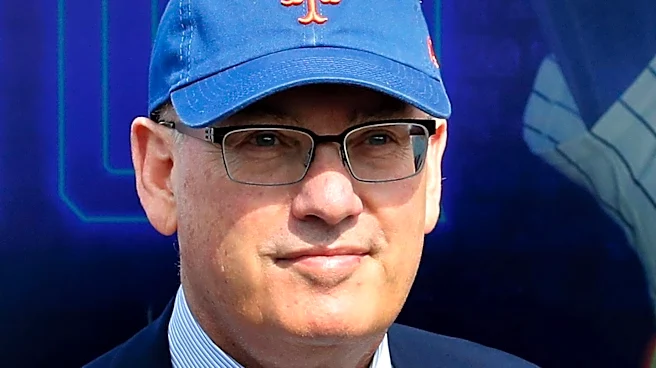
New York Mets owner Steve Cohen is expected to be highly aggressive in pursuing top pitching talent, specifically Tarik Skubal, during the offseason. This comes as Major League Baseball (MLB) has released a new proposal for the Collective Bargaining Agreement
(CBA), which includes a potential salary cap system. The current CBA is set to expire on December 1. The MLB's proposal suggests a 2028 start date for the salary cap, aiming to give teams time to comply. However, the Mets already have significant payroll commitments for 2027 that would exceed the proposed cap. The MLB Players Association (MLBPA) has strongly criticized and rejected the idea of a hard cap-and-floor system, maintaining a united front against it. This creates uncertainty for teams like the Mets, who are known for their substantial spending on player acquisitions.
Why It's Important?
The ongoing negotiations for the MLB's new CBA, particularly the debate over a salary cap, hold significant implications for the financial landscape of U.S. professional baseball. A hard salary cap, as proposed by the league, could fundamentally alter team spending strategies, potentially limiting the ability of high-spending teams like the Mets to acquire top-tier talent. This could lead to a more level playing field in terms of payroll, but it also risks stifling competition for star players and impacting player salaries. For the Mets, a salary cap could force a re-evaluation of their long-term financial commitments and their approach to free agency, especially for high-value players like Skubal. The outcome of these negotiations will determine the economic framework for MLB for years to come, affecting team valuations, player contracts, and the overall competitive balance of the league.
What's Next?
The immediate future hinges on the ongoing negotiations between MLB and the MLBPA regarding the new CBA, which is set to expire on December 1. The MLBPA's firm rejection of a hard salary cap suggests a potentially contentious period of bargaining, possibly leading to a lockout. For the Mets, this uncertainty presents a dilemma: pursue top free agents like Skubal now, hoping that future financial rules will accommodate their spending, or wait until a new CBA is in place for greater clarity. The league has indicated a willingness to negotiate phase-in periods and timelines for any new financial system. The Mets' General Manager, David Stearns, typically avoids long-term, nine-figure commitments to pitchers, which adds another layer of complexity to their offseason strategy amidst the evolving labor situation.
Beyond the Headlines
Beyond the immediate financial implications, the debate over a salary cap in MLB touches upon deeper issues of competitive balance and the philosophy of professional sports leagues. While owners argue a cap would increase parity and raise franchise valuations, players contend it is anti-competitive and would suppress salaries. The experience of other sports leagues, such as the NHL, which operates with a cap-and-floor system, shows that while a cap can lead to parity, it doesn't necessarily solve issues of poor ownership or management. This ongoing conflict highlights the tension between the business interests of team owners and the labor rights and earning potential of players, a dynamic that frequently shapes the landscape of professional sports in the U.S. The resolution of this dispute could set precedents for future labor negotiations across various sports.