






What's Happening?
The retail landscape is undergoing a significant transformation, with a projected shift by 2027 towards stores offering immersive experiences, fostering community, emphasizing curation, and integrating co-creation, all underpinned by AI. A study by ICSC
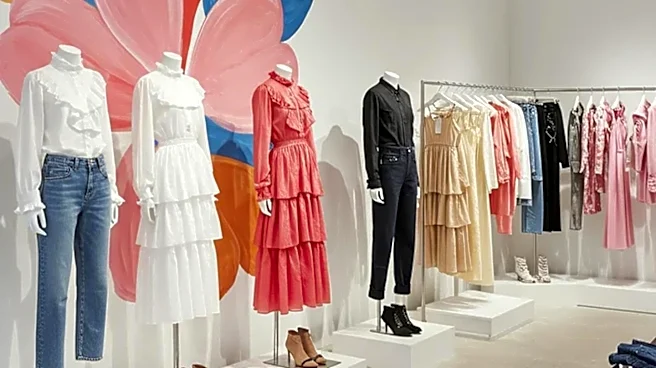
and McKinsey & Company, based on a survey of over 3,000 U.S. consumers, indicates that store visits will become less frequent but more deliberate, with shoppers arriving with clear intentions and higher expectations. Retailers are advised to design stores with a singular mission: either convenience or discovery. Discovery-led stores aim to engage customers through curation, storytelling, novelty, and human connection, featuring rotating collections and exclusive collaborations. Behind the scenes, AI is expected to manage friction points such as checkout, personalization, and supply chain efficiency, operating largely unseen by the customer. Brands are increasingly positioning themselves as cultural and lifestyle creators, extending into categories like home goods and offering in-store cafes and events to enhance dwell time and foster community.
Why It's Important?
This evolving retail paradigm has profound implications for the U.S. economy and consumer behavior. The emphasis on experiential retail, where stores become destinations for discovery and immersion rather than just transaction points, could revitalize brick-and-mortar retail in an increasingly digital world. This shift caters particularly to Gen Z and millennial consumers, who are more likely to shop with retailers offering experiential elements. For businesses, investing in unique in-store experiences, community-building initiatives, and localized offerings can drive customer loyalty and differentiate them in a competitive market. The strategic use of AI to optimize back-end operations will lead to greater efficiency, reduced costs, and improved customer satisfaction, allowing retailers to focus human resources on creating engaging front-end experiences. This transformation also highlights the growing importance of authenticity and ethical practices, as consumers, particularly younger generations, are quick to identify and reject tokenistic gestures, demanding genuine inclusion and alignment between a brand's values and actions.
What's Next?
Looking ahead, the retail sector will likely see an acceleration in the adoption of advanced AI technologies to further personalize the shopping experience and streamline operations. Retailers are expected to continue experimenting with innovative store formats that blend retail with entertainment, hospitality, and cultural events. The trend of co-creation, where customers actively participate in designing products, will likely expand, fostering deeper brand loyalty and unique product offerings. We can anticipate more brands leveraging community engagement through loyalty programs that reward participation in events rather than just spending. The focus on localization will also intensify, with stores tailoring their assortments, décor, and experiences to specific geographic demographics. As AI becomes more sophisticated, it will play an even greater role in predictive analytics, inventory management, and hyper-targeted marketing, further blurring the lines between online and offline retail experiences to create a seamless customer journey.
Beyond the Headlines
The transformation of retail extends beyond mere commercial transactions, touching upon broader societal and cultural shifts. The emphasis on community and connection in retail spaces reflects a growing consumer desire for belonging in an increasingly digital and sometimes isolating world. Stores are becoming new public squares, offering spaces for social interaction, learning, and shared experiences. This evolution also highlights the changing nature of brand identity, moving from product-centric to experience- and value-centric. Brands that successfully integrate authentic community engagement and ethical practices will likely build stronger, more resilient relationships with consumers. Furthermore, the rise of co-creation and customization empowers consumers, shifting them from passive recipients to active participants in the marketplace, which could foster a more democratic and diverse product landscape. The ethical implications of AI in retail, particularly concerning data privacy and algorithmic bias in personalization, will remain a critical area of discussion and regulation as these technologies become more pervasive.