









What's Happening?
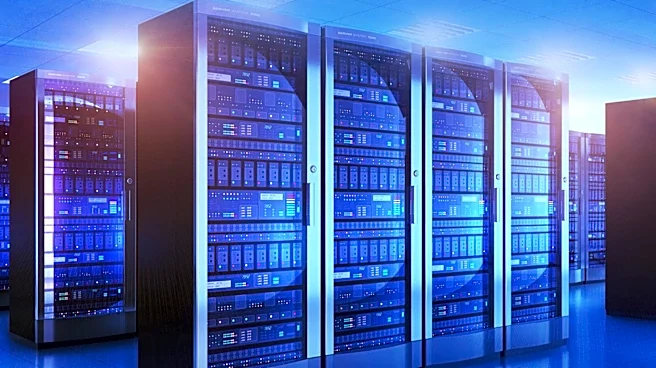
Data centers in the United States are projected to consume one-fifth of the nation's electricity by 2035, a fourfold increase from current levels, according to a BloombergNEF report. This surge is driven by the growing demand for AI computing, which will
push data center capacity to nearly 200 gigawatts over the next decade. The report highlights that nearly half of this capacity will be dedicated to AI training and inference, with the majority concentrated in the U.S. The increased demand is expected to strain already burdened electrical grids, particularly in regions like the PJM Interconnection and ERCOT. The imbalance between supply and demand has already led to a 76% rise in electricity prices over the past year. Despite these challenges, data centers continue to seek connections to these grids, representing a significant portion of charges in recent capacity auctions.
Why It's Important?
The anticipated increase in electricity consumption by data centers underscores the critical role of AI in shaping future energy demands. As AI technologies advance, the infrastructure required to support them will place significant pressure on existing power grids, potentially leading to higher electricity costs and increased competition for resources. This development could have wide-ranging implications for energy policy, grid management, and environmental sustainability. Stakeholders, including utility companies and policymakers, will need to address these challenges to ensure a stable and efficient energy supply. The expansion of data centers also highlights the U.S.'s dominant position in AI computing, which could influence global technology leadership and economic competitiveness.
What's Next?
As data centers continue to expand, stakeholders will need to explore solutions to manage the increased electricity demand. This may involve investments in renewable energy sources, grid infrastructure upgrades, and energy efficiency measures. Policymakers and industry leaders will likely engage in discussions to balance the growth of AI infrastructure with environmental and community concerns. Additionally, the development of new technologies and strategies to optimize energy use in data centers could become a priority. The ongoing dialogue around these issues will shape the future landscape of AI and data center operations in the U.S.