





What's Happening?
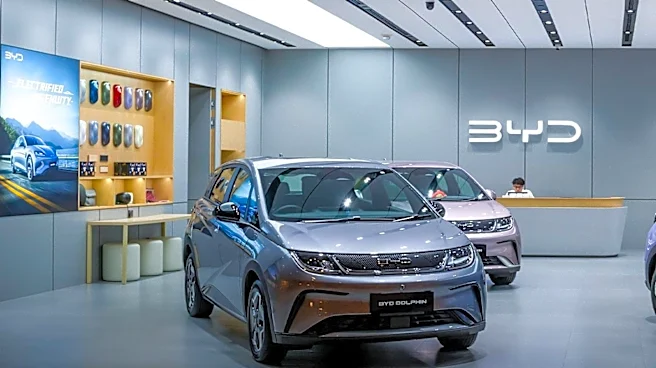
A Dutch court has issued a preliminary ruling prohibiting BYD from selling its Ti7 mid-size SUV in the European Union. The court found BYD guilty of copyright infringement, determining that the Ti7's design is strikingly similar to the Land Rover Defender.
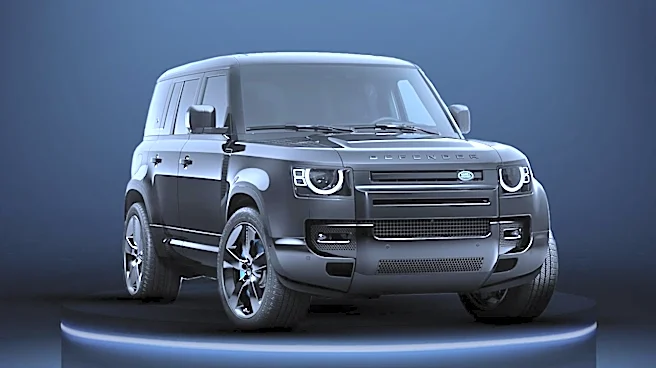
Jaguar Land Rover (JLR) initiated the legal action earlier this year after BYD announced plans to launch the Ti7 in the United Kingdom by 2027. The ruling, delivered on November 20, states that the Ti7 infringes upon JLR's EU design rights, noting that the characteristic and distinctive elements of the Defender are reflected in the BYD vehicle. Both SUVs feature boxy designs, flat rooflights, squared wheel arches, and body-colored panels in place of rear side windows. This decision represents a significant obstacle to BYD's expansion efforts in the European market. BYD has expressed strong disagreement with the ruling, asserting that the Ti7 is an independent design and does not infringe on JLR's rights, and plans to appeal the decision.
Why It's Important?
This ruling carries significant implications for the automotive industry, particularly concerning intellectual property rights and market competition in the European Union. For Jaguar Land Rover, the decision protects the distinctive design of its best-selling Defender, which sold over 100,000 units globally last year, safeguarding its market position and brand identity. For BYD, a rapidly expanding Chinese automaker, this preliminary injunction is a substantial setback to its European market penetration strategy. It could force BYD to redesign the Ti7 for the EU market or face prolonged legal battles, potentially delaying its growth and increasing operational costs. The case also highlights the increasing scrutiny on design originality as Chinese manufacturers expand globally, challenging established automakers. This legal precedent could encourage other manufacturers to pursue similar copyright infringement claims, potentially shaping future vehicle design and market entry strategies across the continent.
What's Next?
BYD intends to appeal the Dutch court's preliminary ruling, indicating that the legal battle over the Ti7's design is far from over. The company has stated its commitment to pursuing every legal avenue to demonstrate the incorrectness of the decision. While the appeal process unfolds, the Dutch court has already prohibited BYD from producing the Ti7 at its new factory in Hungary, where mass production was slated to begin early next year. This immediate halt in production plans will likely impact BYD's manufacturing schedule and supply chain for the European market. Furthermore, Jaguar Land Rover is reportedly planning to file a similar claim in English courts, as the Dutch court ruled it lacked jurisdiction over BYD's U.K. arm. This suggests that BYD could face multiple legal challenges across different European jurisdictions, potentially complicating its market entry strategy in the region even further.
Beyond the Headlines
This case extends beyond a simple design dispute, touching upon broader themes of intellectual property protection in a globalized economy and the challenges faced by established brands against emerging competitors. The ruling underscores the increasing importance of design patents and copyrights as automakers vie for market share, particularly as electric vehicle manufacturers like BYD rapidly expand into new territories. It also highlights a potential tension between innovation and imitation, where the line between inspiration and infringement can be legally contentious. The outcome of BYD's appeal and subsequent legal actions in other countries could set a significant precedent for how design originality is enforced in the automotive sector, influencing future design strategies and cross-border market entries. This could lead to more rigorous design processes and increased legal vigilance from companies seeking to protect their unique product identities.