






What's Happening?
Horse welfare in equestrian sports has become a central issue over the past two decades, driven by scientific bodies, advocacy groups, social media, and investigative journalism. Organizations like the International Society for Equitation Science (ISES)
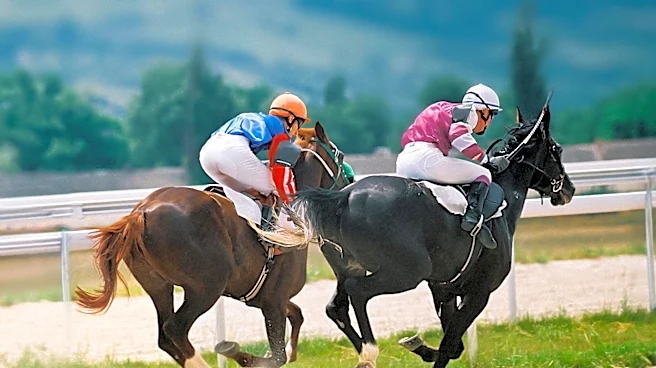
have issued position statements on practices such as restrictive nosebands and aversive training methods, advocating for evidence-based practices that respect horses' natural behaviors. High-profile media investigations, including a BBC Panorama documentary on horse racing, have exposed issues like the slaughter of ex-racehorses and drug use to mask lameness. Social media platforms have amplified these concerns, with viral clips from competitions drawing scrutiny to practices in dressage, eventing, and show jumping. Public opinion polls indicate growing unease among non-equestrians regarding horse welfare. Radical animal rights organizations, such as PETA and Animal Aid, have actively pushed for bans or severe restrictions on equestrian sports, using campaigns and investigations to highlight perceived abuses. Petitions on platforms like Change.org call for bans on horse racing and other competitive disciplines, citing high injury rates, overbreeding, and the prioritization of profit over welfare.
Why It's Important?
The heightened scrutiny on horse welfare in equestrian sports has significant implications for the industry's social license to operate. The pressure from various stakeholders, including scientific communities and the public, is forcing governing bodies to implement stricter regulations and greater transparency. This shift affects the economic viability of equestrian events, as public perception and ethical concerns can influence sponsorship, viewership, and participation. For the U.S. equestrian industry, this means a need for proactive measures to demonstrate commitment to horse welfare, potentially leading to changes in training methodologies, competition rules, and aftercare programs for retired horses. Failure to address these concerns could result in reduced public support, legislative interventions, and a decline in the sport's popularity, impacting a wide range of businesses from breeders and trainers to event organizers and equipment manufacturers.
What's Next?
In response to the growing pressure, national and international equestrian bodies are implementing new policies and structures. The Fédération Équestre Internationale (FEI) has appointed the Equine Ethics and Wellbeing Commission (EEWBC), which has issued recommendations leading to an Equine Welfare Strategy and Action Plan. The FEI has already banned trimming sensory whiskers and introduced a standardized noseband measuring device to prevent overly tight nosebands. Further rule changes are expected, addressing stable conditions, fitness-to-compete assessments, and abuse reporting. Research from organizations like the Sporthorse Welfare Foundation (SWF) will continue to provide data-driven recommendations for improving sport horse welfare. The industry will likely see increased focus on education, robust data collection, and cultural change to ensure consistent implementation of welfare standards. Continued media attention and public advocacy will maintain pressure for ongoing reforms, with potential for more stringent regulations and a greater emphasis on ethical stewardship in equestrian sports.
Beyond the Headlines
The debate over horse welfare in equestrian sports extends beyond the immediate concerns of competition and regulation, touching upon fundamental questions about the ethical treatment of animals in human-centric activities. It highlights the evolving societal values regarding animal rights and the responsibility of humans as guardians of animal athletes. This discussion challenges the traditional paradigms of sports that involve animals, prompting a re-evaluation of what constitutes fair play and humane practice. The long-term implications could include a fundamental shift in how equestrian sports are perceived and conducted, potentially leading to a more holistic approach that prioritizes the physical and psychological well-being of horses above competitive outcomes. This could also influence other animal-involved industries, fostering a broader cultural movement towards greater animal protection and ethical engagement.