





What's Happening?
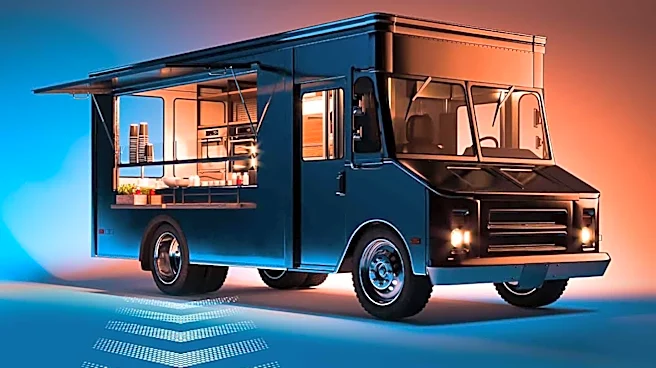
JD.com's catering brand, 7Fresh Kitchen, has introduced its first intelligent food truck, dubbed the 'Chef Transformer,' at the China International Fair for Trade in Services (CIFTIS). This AI-powered vehicle is designed to deliver freshly stir-fried
Chinese cuisine to visitors, marking a significant step in the global expansion of Chinese cuisine and the upgrade of China's service industry. The food truck is equipped with three intelligent cooking robots and a smart coffee machine, enabling fully automated operations from order placement to robotic stir-frying. It aims to address common catering challenges at large-scale events, such as temporary visitor surges, limited food options, and concerns about food safety and consistent quality. The truck offers signature Chinese dishes like stir-fried pork with chili and spicy beef, alongside beverages.
Why It's Important?
This innovation by JD.com's 7Fresh Kitchen has significant implications for the food service industry, particularly in the context of large events and global culinary expansion. The 'Chef Transformer' addresses critical pain points in traditional catering, offering a scalable, consistent, and hygienic solution. Its reliance on AI and robotics ensures standardized taste and quality, which can be a challenge for traditional catering, especially with complex cuisines like Chinese food. For the U.S. market, this technology could influence future event catering, potentially leading to more diverse and efficiently prepared food options at festivals, sports matches, and expos. It also highlights the growing trend of automation in the food industry, which could impact labor markets and operational models for restaurants and catering services, potentially setting new standards for food safety and efficiency.
What's Next?
Following its debut at CIFTIS, the 'Chef Transformer' food truck is slated to appear at various events, including sports matches, music festivals, and expos, both domestically and potentially internationally. JD.com plans to expand the vehicle's coverage and optimize its global export service package. This includes offering a comprehensive overseas catering solution that encompasses AI-standardized recipes, operational standard operating procedures (SOPs), full supply chain frameworks, and digital systems. The company aims to popularize intelligent Chinese catering worldwide, addressing challenges such as the global shortage of professional Chinese chefs and inconsistencies in dish standardization. This could lead to increased adoption of robotic cooking technologies in the global food service sector and new pathways for international culinary exchange.
Beyond the Headlines
The 'Chef Transformer' represents more than just a technological advancement in food preparation; it signifies a broader shift in how cultural products, like cuisine, are globalized and consumed. By standardizing recipes and automating cooking, JD.com is attempting to overcome cultural barriers and ensure consistent quality, which can be a double-edged sword. While it makes Chinese cuisine more accessible globally, it also raises questions about the authenticity and artisanal aspects of traditional cooking. This development could trigger discussions about the role of human chefs versus AI in preserving culinary heritage and the impact of automation on culinary arts. Furthermore, it underscores the increasing integration of AI into everyday life, transforming industries that were once considered resistant to full automation, and setting a precedent for future innovations in service sectors worldwide.