
What's Happening?
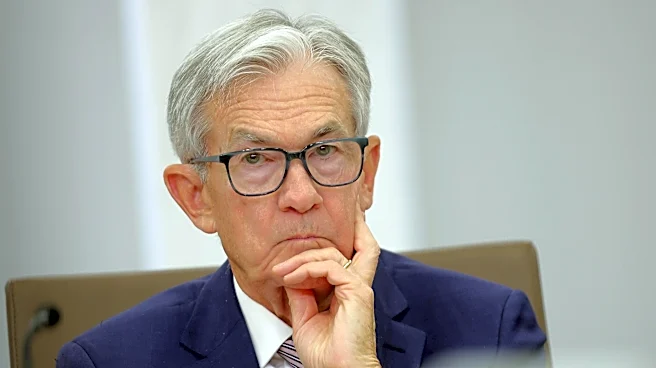
Federal Reserve Chair Kevin Warsh is confronting a complex policy challenge as the artificial intelligence (AI) boom continues to unfold. Warsh views AI as a 'decisive historical turning point' for maintaining
American global leadership and has expressed cautious optimism about its potential. However, there is a growing debate among Fed officials regarding AI's economic impact, specifically whether it will fundamentally reshape the economy, fuel inflation, or lead to a downturn. Some Fed officials believe that AI investment is currently driving inflation, a perspective that contrasts with President Trump's desire for the AI boom to continue unchecked. Warsh has acknowledged that AI initially affects demand, with supply and productivity improvements potentially emerging later, but he has not publicly aligned himself on whether the AI boom and inflation are currently intertwined. This internal disagreement and Warsh's cautious communication style are creating a policy dilemma for the central bank.
Why It's Important?
The Federal Reserve's handling of the AI boom is crucial for the U.S. economy, as it involves balancing the promotion of a transformative technology with the imperative of maintaining price stability. The debate within the Fed highlights the uncertainty surrounding AI's long-term economic effects. If AI investment is indeed contributing to inflation, the Fed's response could involve interest rate hikes that might inadvertently slow down innovation in a sector deemed critical for national competitiveness. Conversely, a failure to address AI-driven inflationary pressures could lead to broader economic instability. The volatility in financial markets, as seen with the recent fluctuations in AI-related stocks, underscores the significant economic stakes involved. The Fed's decisions will influence investment flows, job creation, and the overall trajectory of technological advancement in the U.S., impacting various industries and economic stakeholders.
What's Next?
Despite the internal debate, Federal Reserve officials are expected to raise the benchmark interest rate by 0.25 percentage points at their December 8-9 monetary policy meeting. This anticipated move reflects a consensus among many officials that the AI boom is pushing economic growth beyond its potential, necessitating some restraint on investment and demand. The discussion surrounding AI's impact on inflation and the broader economy will continue to be a central theme in future Fed meetings. Political leaders, including President Trump, and various economic analysts will closely monitor the Fed's actions and statements. The public's concerns about job security and the rapid pace of technological change, as evidenced by voter approval of measures to slow data center construction, suggest that the Fed's policies will also face scrutiny from a societal perspective.
Beyond the Headlines
The ongoing situation reveals a deeper challenge for central banking in an era of unprecedented technological disruption. The traditional tools and frameworks for monetary policy may not fully capture the complexities introduced by AI, which can simultaneously drive productivity gains and create inflationary pressures. The ethical and social implications of AI, such as job displacement and the need for regulatory oversight, are becoming increasingly intertwined with economic policy. The political polarization surrounding AI's benefits and risks further complicates the Fed's role, as its decisions can have significant social and political ramifications beyond purely economic ones. This period could necessitate a re-evaluation of how central banks define and measure economic stability in a technologically advanced and rapidly evolving global economy, potentially leading to new approaches to monetary policy.