





What's Happening?
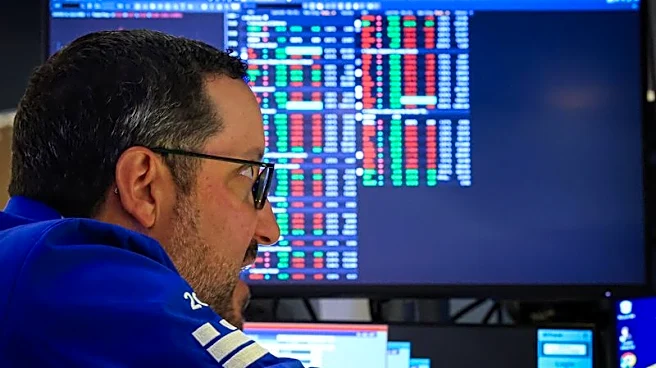
Broader participation in the U.S. stock market has altered how the economy responds to changes in interest rates, according to research from the Federal Reserve Bank of New York. In the mid-1980s, less than 30 percent of households held equity, but by
the early 2000s, over half of U.S. households owned equity either directly or through mutual funds, 401(k)s, and IRAs. This increased participation means that when interest rates rise, the impact on individual households' consumption is less pronounced. While stock market participants initially cut consumption more than non-participants following interest rate increases, this gap has narrowed significantly as participation has broadened. The model suggests that as more households own equity, each participant holds a smaller per-capita equity position and takes on less leverage, leading to a weaker wealth effect from stock price movements and reduced financing pressures from higher interest rates. Consequently, the aggregate output response to an unexpected interest rate increase is estimated to be 20 percent smaller in a high-participation economy compared to a low-participation one.
Why It's Important?
This shift has significant implications for monetary policy and economic stability. Central banks, like the Federal Reserve, rely on interest rate adjustments to influence economic activity. If broader stock market participation dampens the economy's response to these changes, it means that interest rate hikes may have a less potent effect on consumer spending, asset prices, and investment. This could necessitate larger or more frequent interest rate adjustments to achieve desired economic outcomes, or it could imply a longer lag time for policy effects to materialize. For businesses, this means that changes in borrowing costs might not translate as directly into consumer demand fluctuations, potentially altering investment decisions. For households, while individual exposure to stock market volatility might be reduced, the overall effectiveness of monetary policy in managing economic cycles could be diminished, potentially leading to different economic outcomes during periods of inflation or recession. The findings suggest a structural change in the U.S. economy that policymakers need to consider when formulating and implementing monetary policy.
What's Next?
Policymakers at the Federal Reserve and other economic institutions will likely need to incorporate these findings into their models and analyses of the U.S. economy. This could lead to a re-evaluation of how interest rate changes are expected to impact various sectors and household behaviors. Further research may explore the optimal communication strategies for monetary policy in an environment where its transmission mechanisms are evolving. Additionally, the implications for financial stability will need to be considered, as a more widely distributed stock market risk might alter the dynamics of financial crises. The ongoing monitoring of household portfolio composition and its correlation with economic indicators will be crucial. This research also opens avenues for understanding how other structural changes in the economy, alongside increased stock market participation, collectively influence the effectiveness of monetary policy tools.
Beyond the Headlines
The broader implications extend to the concept of financial literacy and wealth distribution. As more households participate in the stock market, there's a greater need for accessible financial education to ensure informed decision-making. While the research suggests a dampening effect on economic responses, it also highlights the increasing interconnectedness of household finances with capital markets. This could lead to a more democratized form of wealth creation but also exposes a larger segment of the population to market fluctuations, albeit with reduced individual impact. The findings also touch upon the long-term shifts in the U.S. economic landscape, where traditional manufacturing and labor-intensive industries have given way to a more service-oriented and financially integrated economy. Understanding these evolving dynamics is crucial for fostering inclusive economic growth and mitigating systemic risks in an increasingly complex financial environment.