






What's Happening?
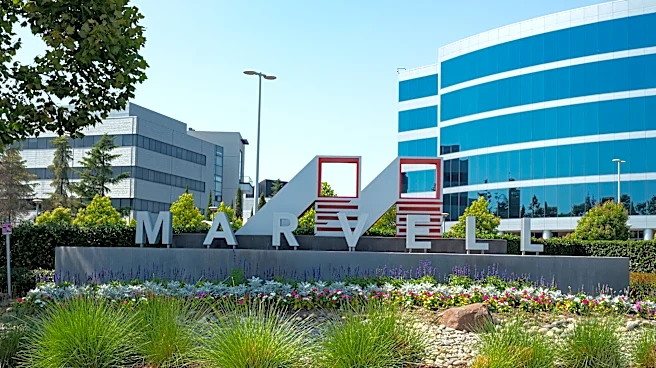
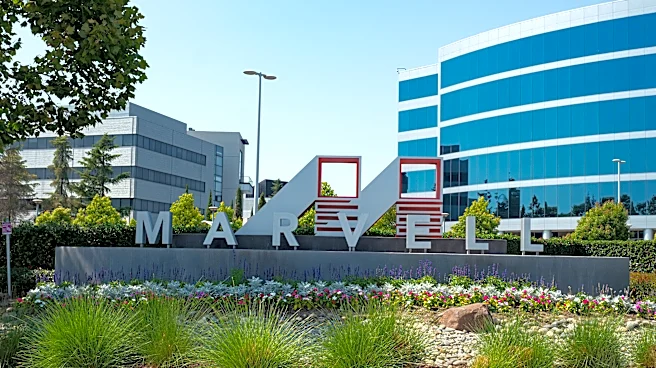
Marvell Technology, Inc. is a fabless semiconductor company that designs chips for data movement, storage, processing, and security in data centers, carrier networks, and enterprise environments. The company, founded in 1995 and publicly traded on Nasdaq
as MRVL, is headquartered in Santa Clara, California. Marvell's business model involves designing integrated circuits and software while outsourcing manufacturing to third-party foundries. Its product portfolio includes data processing units, Ethernet switches, optical interconnects, processors, and storage controllers. In fiscal 2026, the data center segment accounted for approximately 74% of its net revenue, driven by demand for artificial intelligence (AI) and cloud networking. Matthew J. Murphy serves as president and chief executive officer.
Why It's Important?
Marvell Technology's strategic focus on data infrastructure positions it as a critical enabler of cloud computing and artificial intelligence. As data centers expand to meet the growing demands of AI training and inference, there is an increasing need for high-speed switching, custom compute silicon, and optical interconnects, all of which Marvell provides. This alignment with major technological trends makes Marvell a significant entity for investors interested in the long-term growth of AI and cloud infrastructure. The company's specialized knowledge in analog, mixed-signal, and digital signal processing, coupled with a substantial intellectual property portfolio and strong ties to major cloud providers, strengthens its competitive advantage in the semiconductor supply chain.
What's Next?
Marvell Technology is expected to continue leveraging its position in the data center and connectivity markets to capitalize on the ongoing expansion of cloud and AI infrastructure. The company's strategy includes developing custom ASICs tailored to specific customer needs, which helps cloud and AI providers differentiate their systems. However, Marvell faces several risks, including intense competition within the semiconductor industry and customer concentration, with the top ten customers representing about 82% of net revenue in fiscal 2026. Geopolitical and trade risks, particularly concerning its reliance on third-party foundries in regions like Taiwan and product shipments to China, also warrant close monitoring. Rapid technological shifts and the potential for large customers to develop more chips internally remain ongoing considerations for the company.
Beyond the Headlines
Marvell Technology's role as a fabless chipmaker highlights a significant trend in the semiconductor industry: the separation of design from manufacturing. This model allows companies like Marvell to focus their resources on innovation and intellectual property development, while relying on specialized foundries for production. This division of labor has implications for global supply chain resilience, technological specialization, and the competitive landscape. The company's deep integration into AI and cloud infrastructure also raises broader questions about the future of data processing, the increasing demand for energy-efficient computing, and the ethical considerations surrounding advanced AI development. Its success is intertwined with the broader digital transformation impacting industries worldwide.