







What's Happening?
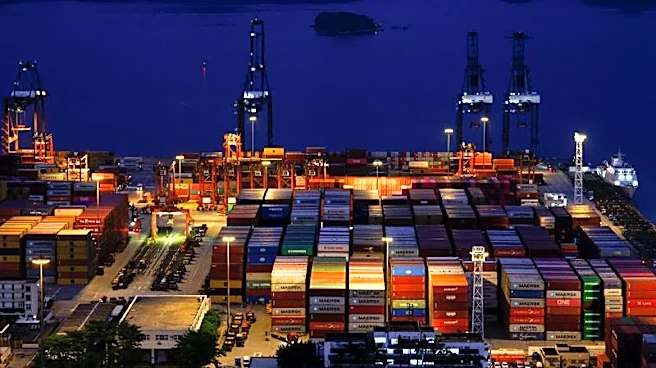
China's trade surplus has surpassed $1 trillion for the second consecutive year, reaching $1.04 trillion through October, with two months remaining in the year. This figure is approaching the record $1.2 trillion surplus recorded in 2025. The significant
surplus is largely driven by robust exports, which jumped 35.2% in October year-over-year, exceeding economists' expectations. Imports also saw a substantial increase of 41.6% in October, the strongest growth since May 2021, primarily fueled by demand for tech-related goods, critical minerals, and energy supplies like crude oil, LNG, and coal. The strength in exports, particularly those related to AI hardware, has allowed Chinese policymakers to maintain moderate support for the economy, aiming for an annual growth target of 4.5%-5%, despite weak household consumption.
Why It's Important?
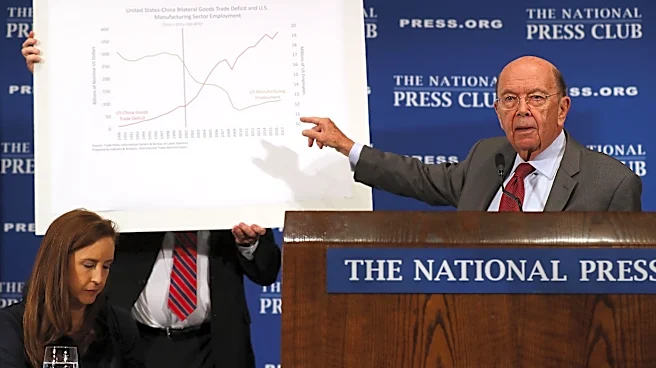
The sustained high trade surplus in China has significant implications for global trade dynamics and international economic relations. Partner countries, including the U.S., have increasingly voiced concerns that China's export-driven growth model is undercutting local industries and creating economic imbalances. The International Monetary Fund (IMF) has repeatedly urged China to shift its economic focus from exports to domestic consumption to achieve a more balanced global economy. This imbalance can lead to trade tensions and protectionist measures from other nations seeking to protect their domestic markets. For U.S. industries, particularly those competing with Chinese exports, this trend could mean continued pressure on pricing and market share, potentially impacting employment and investment decisions. The reliance on AI hardware exports also highlights the growing technological competition between major global economies.
What's Next?
The continued growth of China's trade surplus is likely to intensify calls from international bodies and trading partners for Beijing to implement policies that boost domestic demand and rebalance its economy. This could lead to increased pressure on China to open its markets further, reduce subsidies for export-oriented industries, or strengthen its social safety net to encourage consumer spending. If China does not significantly alter its economic strategy, trade disputes and retaliatory measures from countries like the U.S. could escalate. Policymakers in the U.S. will likely continue to monitor these trade figures closely, potentially influencing future trade negotiations and economic policies aimed at addressing perceived unfair trade practices. The trajectory of global AI buildout will also be a key factor, as any slowdown could impact China's export momentum.
Beyond the Headlines
The persistent trade surplus reflects deeper structural issues within China's economy, particularly the imbalance between production and consumption. While strong exports contribute to economic growth, a lack of robust domestic demand can hinder long-term sustainable development and create vulnerabilities. The focus on AI-related exports also underscores China's strategic push in advanced technologies, positioning itself as a global leader in emerging sectors. This technological advancement, coupled with an export-heavy model, could reshape global supply chains and technological dependencies. The ethical and geopolitical implications of such a dominant economic and technological position are profound, influencing international relations, intellectual property debates, and the future of global economic governance. The ongoing debate about rebalancing China's economy is not just about trade figures but about the fundamental nature of global economic power and cooperation.