
What's Happening?
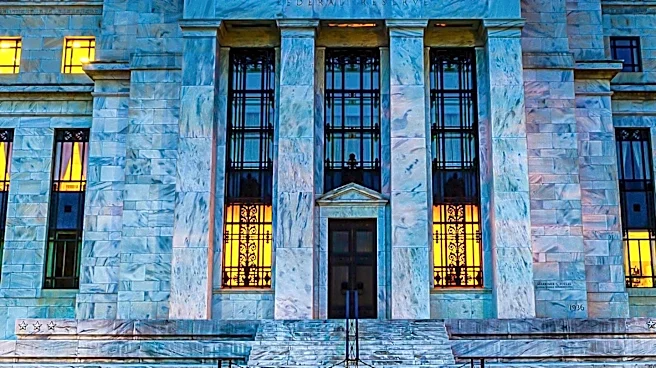
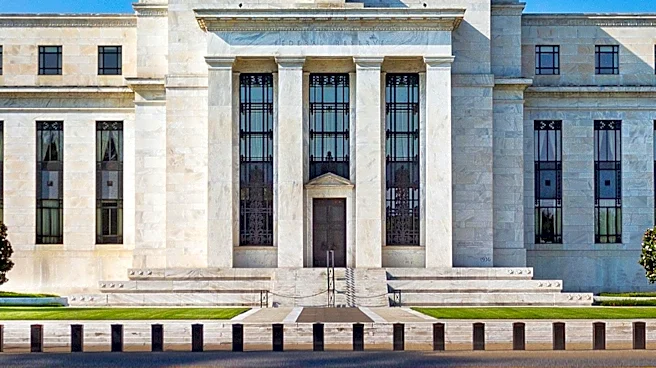
The Federal Reserve is at a critical juncture, with a rate hike anticipated on December 9th, according to Danielle DiMartino Booth, CEO and chief strategist at QI Research. Following this expected increase,
Federal Reserve Vice Chairs Philip Jefferson and John Williams have indicated a more patient approach, suggesting that there might be no further rate hikes in 2027. This signals a potential shift towards a more gradual monetary policy path after the immediate action to address current economic conditions. The context for this includes stretched consumers pushing retailers like Target and TJX towards offering opening price points, and leaner inventories heading into December, which means fewer deep markdowns. Additionally, holiday travel costs are at a decade-high, primarily driven by increased jet fuel prices.
Why It's Important?
This potential shift in the Federal Reserve's strategy has significant implications for the U.S. economy, particularly for retailers and consumers. A more patient approach to interest rates after December could provide some relief for businesses carrying debt and consumers managing credit card balances, as borrowing costs might stabilize rather than continue to rise sharply. This could influence consumer spending patterns and investment decisions in the coming year. For retailers, the backdrop of high holiday travel costs and budget-conscious shoppers means a continued focus on value and competitive pricing. The Federal Reserve's stance is crucial for market stability and economic forecasting, as it directly impacts the cost of capital and overall economic sentiment.
What's Next?
The immediate next step is the Federal Reserve's December 9th meeting, where a rate hike is expected. Following this, market participants and economic observers will be closely watching for further communications from Federal Reserve officials to confirm the signaled patience regarding future rate adjustments in 2027. Businesses and consumers will need to adapt to the evolving interest rate environment, which could influence financial planning and investment strategies. The retail sector, in particular, will continue to navigate the challenges of consumer spending habits and inventory management in a potentially more stable, but still cautious, economic climate. The Federal Reserve's decisions will be pivotal in shaping the economic landscape for the upcoming year.
Beyond the Headlines
The Federal Reserve's contemplation of a more gradual path after the December rate hike highlights the delicate balance required in monetary policy. It suggests an acknowledgment of the cumulative impact of previous rate increases on various economic sectors, including consumer debt and retail performance. This strategic pause, if it materializes, could allow the economy to absorb the effects of past tightening without immediately facing further restrictive measures. It also underscores the Federal Reserve's responsiveness to evolving economic data and market conditions. The long-term implications could include a recalibration of growth expectations, a potential easing of financial pressures on highly leveraged entities, and a more predictable interest rate environment, which could foster greater investment and stability in the U.S. economy.