



What's Happening?
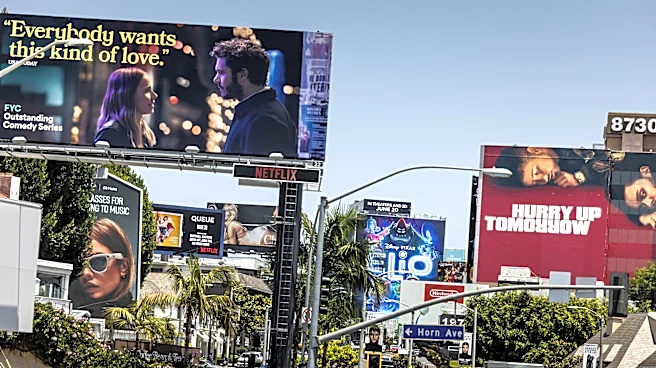
The Sunset Strip in Los Angeles is marking 60 years since a period of youth-led protests and cultural shifts transformed it into a testing ground for the 1960s 'youthquake.' Originally a roadway connecting Los Angeles and Beverly Hills, the Strip became
a hub for nightlife in the 1920s, known for illegal gambling and drinking. By the 1960s, it was a gathering place for young people, leading to conflicts with authorities over curfews and anti-loitering laws. These tensions culminated in what became known as the 'curfew riots' in November 1966, where teenagers and young adults protested police enforcement. Over the decades, the Strip has seen significant changes, including the demolition of iconic venues like the Garden of Allah and Ciro's transforming into the Comedy Store. It has evolved from a place of celebrity glamour and mob activity to a center for modern popular music, hosting legendary artists and becoming a symbol of counterculture.
Why It's Important?
The transformation of the Sunset Strip reflects broader cultural and social shifts in the United States, particularly the rise of youth culture and its impact on urban landscapes and entertainment industries. Its history highlights the ongoing tension between established norms and emerging countercultures, influencing music, fashion, and social movements. The Strip's evolution from a loosely regulated area to a more structured entertainment district also illustrates changes in urban planning and law enforcement's role in managing public spaces. The area's ability to reinvent itself, from jazz clubs to rock venues, demonstrates the dynamic nature of the entertainment industry and its constant adaptation to new trends and audiences. This historical context provides insight into how cultural hubs can both reflect and drive societal change, impacting local economies and national cultural narratives.
What's Next?
The Sunset Strip continues to evolve as a prominent entertainment and commercial district within West Hollywood. Its future will likely involve ongoing adaptation to new entertainment trends, technological advancements, and demographic shifts. As historical venues are preserved or repurposed, the Strip will balance its rich past with contemporary demands for new experiences. The area may see further development in hospitality, retail, and live entertainment, continuing its legacy as a dynamic cultural landmark. Stakeholders, including local government, businesses, and community groups, will likely focus on maintaining its iconic status while addressing modern challenges such as urban development, tourism management, and cultural preservation. The Strip's capacity for reinvention suggests it will remain a significant cultural and economic asset for Los Angeles.
Beyond the Headlines
The Sunset Strip's history offers a compelling case study in the interplay of urban development, social movements, and cultural identity. The 'curfew riots' of 1966, for instance, were not merely about curfews but symbolized a larger generational clash and the burgeoning youth rebellion against authority, influencing civil liberties discussions and artistic expression. The Strip's long-standing association with both illicit activities and groundbreaking entertainment raises questions about the nature of urban spaces as sites of both transgression and innovation. Its continuous reinvention also highlights the economic and cultural value of adaptability in urban environments. The legacy of the Sunset Strip underscores how specific geographical locations can become powerful symbols of cultural change, reflecting broader societal values and conflicts over decades.