





What's Happening?
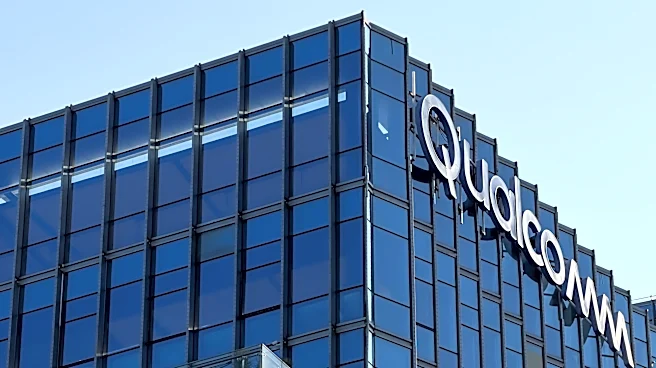
Qualcomm is undergoing a strategic shift, aiming for non-handset revenue to constitute over 50% of its chip sales in the current fiscal year. This comes as the company reported a 26% drop in smartphone chip sales to $5.14 billion in the fourth quarter
of 2026, contributing to an 8% decline in total chip segment revenue to $9.02 billion. Overall, Qualcomm's total sales fell 8% to $10.3 billion. The decline in handset revenue is attributed to major customers adjusting build plans due to memory supply constraints and related price increases, as well as the eventual loss of its Apple modem business. In contrast, Qualcomm's data center business is showing growth, with the company expecting it to reach a $7-billion run-rate by the end of fiscal 2027. Qualcomm has also announced a multi-generational collaboration with Amazon Web Services to develop custom AI data center chips and connectivity products, with Amazon potentially purchasing up to $60 billion of Qualcomm products.
Why It's Important?
This strategic pivot by Qualcomm is significant for the U.S. technology sector, highlighting a broader trend of diversification among semiconductor companies away from a sole reliance on the smartphone market. The decline in handset sales, partly due to memory shortages and increased costs, underscores the volatility and competitive pressures within the mobile industry. Qualcomm's aggressive move into AI data centers and automotive chips represents a substantial opportunity for growth, aligning with the increasing demand for specialized chips in these emerging sectors. This shift could bolster U.S. leadership in AI and cloud computing infrastructure, creating new revenue streams and fostering innovation. However, the transition also presents challenges, as the company needs to prove its ability to execute on these new ventures and offset the shrinking core handset business. The success of this diversification will impact Qualcomm's market position and influence the competitive landscape for other U.S. chipmakers.
What's Next?
Qualcomm expects its non-handset revenue, including automotive, IoT, and data center segments, to grow by over 60% in fiscal 2027, exceeding half of its QCT revenue. The company projects data center revenues to scale throughout fiscal 2027, exiting the year at a $7 billion run rate, with a target of $5 billion in fiscal 2027 and $15 billion in fiscal 2029. Qualcomm's first-quarter fiscal 2027 forecast includes no further sales from Apple, indicating a complete transition away from that business. The company anticipates first-quarter revenue between $10.4 billion and $11.2 billion, with chip segment sales between $9 billion and $9.6 billion. Analysts are closely watching the data center segment's performance to validate the company's diversification strategy. The company's ability to meet these ambitious targets will be crucial for its stock performance and long-term growth trajectory.
Beyond the Headlines
Qualcomm's strategic shift reflects a fundamental change in the semiconductor industry, moving beyond traditional consumer electronics to power the next generation of computing. The emphasis on AI data centers and automotive technology signifies a future where chips are integral to every aspect of infrastructure and transportation. This transition also brings into focus the increasing importance of custom chip development for hyperscale cloud providers, potentially altering the dynamics between chip manufacturers and their large enterprise customers. The challenges of managing supply chain disruptions, such as memory shortages, and the need for continuous innovation in new markets will define the success of this pivot. Furthermore, the ethical implications of widespread AI deployment and the energy demands of large data centers will be critical considerations as Qualcomm and its peers navigate this evolving landscape.