



What's Happening?
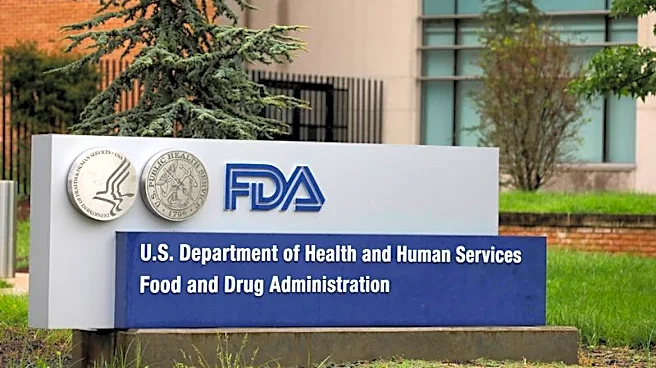
The U.S. Food and Drug Administration (FDA) and the U.S. Department of Agriculture (USDA) have established a joint regulatory framework for cultivated meat products. This collaboration aims to ensure the safety and proper labeling of lab-grown meat as
it moves towards commercialization in the United States. The FDA is responsible for overseeing the safety of these novel food products, ensuring they meet the same stringent safety standards as conventionally produced meat. This includes evaluating the cell lines, growth media, and overall production processes to guarantee consumer safety. Following FDA approval, the USDA takes over the regulation of production and labeling, ensuring that cultivated meat is produced in sanitary facilities and accurately labeled for consumers. This dual agency approach was solidified with the first U.S. approvals granted in 2023 to UPSIDE Foods and GOOD Meat, setting a precedent for future market entries. The agencies are actively developing guidelines to facilitate the commercialization of cultivated meat, with expectations for broader availability by the late 2020s.
Why It's Important?
This regulatory framework is crucial for the nascent cultivated meat industry in the U.S., providing a clear pathway for products to reach consumers. By establishing clear safety and labeling standards, the FDA and USDA are building consumer trust and facilitating market entry for companies investing heavily in this technology. The development of cultivated meat addresses significant global challenges, including environmental sustainability, ethical concerns regarding animal welfare, and food security. Conventional livestock farming is a major contributor to greenhouse gas emissions, deforestation, and water consumption. Cultivated meat offers a potential solution by significantly reducing land and water usage and cutting greenhouse gas emissions. Furthermore, it provides an ethical alternative for meat consumption by eliminating the need for animal slaughter. The ability to produce meat anywhere, including urban centers, enhances food system resilience against climate shocks and supply chain disruptions, which is a powerful motivator for investors and a key focus for future food systems research. The market potential is substantial, attracting billions in investment from major agri-food giants and startups, accelerating innovation and the race for price parity.
What's Next?
The initial rollout of cultivated meat products in the U.S. is expected to be gradual, starting with high-end restaurants and exclusive venues. This strategy allows companies to refine their products, gather consumer feedback, and target early adopters willing to pay a premium. These small-scale launches are critical for generating buzz and demonstrating real-world viability before expanding to broader retail markets. The next phase involves scaling up production to achieve cost parity with conventional meat, which requires building large-scale bioreactor facilities and significantly reducing the cost of growth media. Industry projections suggest that price parity for some products, such as chicken, could be achieved by the late 2020s, contingent on successful scale-up and technological advancements. The FDA and USDA will continue to provide detailed guidance and review applications, ensuring that new products meet regulatory requirements. Consumers can expect to see more cultivated meat options become available in limited retail settings in major markets between 2025 and 2030, with mass market adoption anticipated beyond 2030.
Beyond the Headlines
The emergence of cultivated meat raises deeper implications beyond immediate market availability. Ethically, it challenges traditional notions of food production and consumption, offering a future where meat can be enjoyed without the moral dilemmas associated with animal farming. Legally, the regulatory framework sets a precedent for how novel food technologies will be integrated into existing food safety and labeling laws, potentially influencing international standards. Culturally, the acceptance of lab-grown meat will depend on consumer education and transparency, with clear labeling being foundational for building public trust. The shift towards cultivated meat could also trigger long-term economic shifts, impacting traditional agricultural industries and creating new sectors in biotechnology and cellular agriculture. While the environmental benefits are significant, the energy demands of large-scale bioreactors will necessitate a transition to renewable energy sources to fully realize its sustainability potential. The ongoing research into scaffolding materials and growth media also highlights the continuous innovation required to perfect the texture and taste of cultivated meat, moving beyond ground products to more complex cuts like steaks.