




What's Happening?
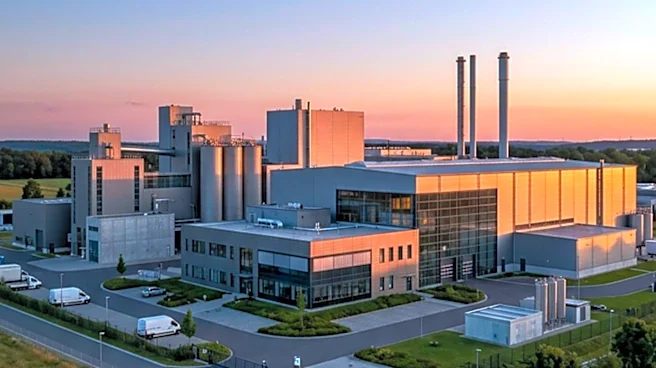
Molten Industries has launched a demonstration plant in Oakland, California, marking the first facility globally to convert natural gas into battery-grade graphite. Commissioned on November 18, the plant utilizes methane pyrolysis to split natural gas into graphite and hydrogen.
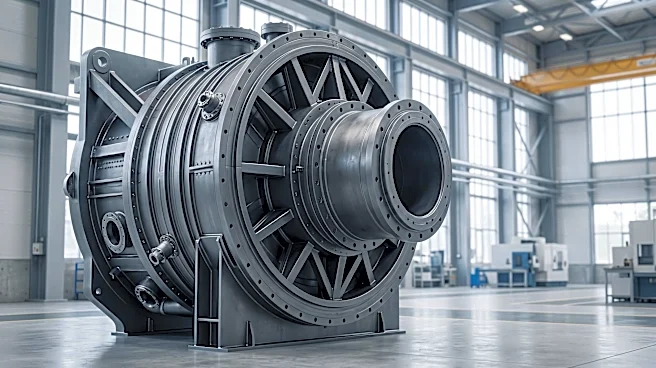
It operates a single modular reactor with an annual capacity of 300 metric tons of graphite anode material, achieving natural gas-to-graphite yields exceeding 95 percent. This process is designed to be more cost-effective and energy-efficient than traditional synthetic graphite manufacturing, using feedstock that costs four times less and consuming three times less electricity. The method also eliminates the need for a graphitization furnace. The co-product, hydrogen, can be sold for various industrial uses, potentially improving the plant's economics. This initiative aims to reduce the U.S.'s reliance on China, which currently controls approximately 75 percent of the global graphite anode supply chain and 97 percent of synthetic graphite anode output.
Why It's Important?
This development is crucial for enhancing the domestic supply chain of electric vehicle batteries in the United States. Graphite is a critical component for lithium-ion battery anodes, and China's dominant position in its production poses supply chain vulnerabilities for U.S. battery and automakers. Molten Industries' plant offers a potential solution by providing a domestic source of battery-grade graphite, which could mitigate risks associated with Chinese export controls and tariffs. By innovating a process that uses abundant U.S. natural gas, the company aims to achieve cost parity with Chinese graphite, even without import duties in future larger-scale plants. This could significantly reduce manufacturing costs for U.S. EV producers, making electric vehicles more affordable and competitive. Furthermore, the production of hydrogen as a byproduct aligns with broader clean energy initiatives, offering additional economic and environmental benefits.
What's Next?
The immediate next step for Molten Industries will be to demonstrate the scalability of its technology and prove its ability to replicate the reactor at a much larger size while maintaining cost-effectiveness and meeting battery manufacturers' stringent specifications. The current plant's capacity of 300 metric tons is small compared to global demand, so expansion will be critical for significant market impact. The company will also need to navigate the market for its hydrogen co-product, which has its own price cycles and demand fluctuations. Success in this demonstration phase could attract further investment and partnerships, accelerating the deployment of larger commercial facilities. This could lead to a substantial shift in the global graphite supply chain, fostering greater energy independence for the U.S. and potentially influencing international trade dynamics in critical battery materials.
Beyond the Headlines
Molten Industries' innovative approach to graphite production represents a significant technological leap with broader implications for industrial sustainability and resource utilization. By using methane pyrolysis, the process not only produces essential battery materials but also generates hydrogen without the carbon emissions associated with traditional methods. This dual benefit could position natural gas as a more environmentally friendly feedstock for industrial processes, challenging conventional views on its role in the energy transition. The success of this technology could also spur further research and development into other novel methods for producing critical materials from abundant domestic resources, reducing reliance on mining and complex international supply chains. Ethically, it highlights the ongoing tension between leveraging existing fossil fuel infrastructure and transitioning to fully renewable energy sources, offering a bridge solution that addresses immediate supply chain needs while advancing cleaner production methods.