
What's Happening?
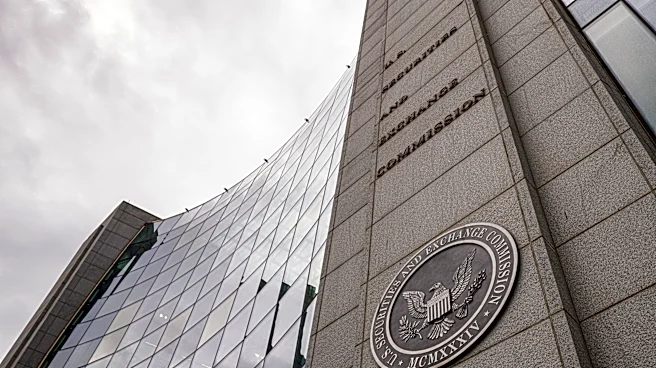
Gary Gensler, who served as the head of the U.S. Securities and Exchange Commission (SEC) from 2021 to 2025, is cautioning that the current artificial intelligence (AI) boom is a bubble poised to burst. He anticipates a recession in the U.S. economy even
before the presidential election in November 2028. Gensler, now an MIT professor, draws parallels between the current AI investment climate and the dot-com bubble of the late 1990s, suggesting that the only uncertainty is whether the ensuing recession will be mild or more severe. He points to an estimated $800 billion annually flowing into AI infrastructure, with major technology companies spending five times more in 2026 than three years prior. Gensler believes this pattern of capital markets financing infrastructure in anticipation of future revenues, similar to the electricity and internet booms, will eventually lead to a significant downturn, comparable to the dot-com crash but less severe than the 2008 financial crisis.
Why It's Important?
Gensler's warning carries significant weight due to his past role as SEC Chairman, a position that provided him with deep insights into financial markets and regulatory oversight. His prediction of an AI bubble and subsequent recession challenges the prevailing optimism surrounding the AI sector and could influence investment strategies across U.S. industries. If his forecast proves accurate, highly leveraged AI computing power providers, often referred to as 'Neoclouds,' are identified as the most vulnerable. These companies, which rent computing capacity to AI developers, are frequently heavily debt-financed. A market correction could lead to bankruptcies among these entities, impacting the broader technology ecosystem and the financial institutions that have lent to them. While larger technology firms are expected to weather such a storm, the potential for widespread financial distress among smaller, innovative AI companies could stifle innovation and economic growth.
What's Next?
The immediate future will likely see continued debate and scrutiny over the valuation of AI companies and the sustainability of current investment trends. Investors and financial analysts will be closely monitoring financial reports, particularly from companies like NVIDIA, which has shown record growth but also faces skepticism from some analysts who have cut their price targets. The focus will also be on the financial health of 'Neocloud' companies, with their debt levels and ability to generate sufficient revenue to cover interest expenses becoming critical indicators. The upcoming U.S. presidential election in November 2028 will also be a key event, as Gensler suggests a recession could precede it. The reactions of major stakeholders, including technology giants, venture capitalists, and government regulators, to these warnings will shape the trajectory of the AI market and potentially influence broader economic policy decisions.
Beyond the Headlines
Gensler's concerns extend beyond mere market fluctuations, touching upon the ethical and systemic risks associated with rapid, debt-fueled technological expansion. The comparison to past bubbles, such as the dot-com era, highlights a recurring pattern where speculative investment outpaces tangible returns, leading to market corrections. This situation raises questions about the effectiveness of current regulatory frameworks in identifying and mitigating such risks in emerging technology sectors. The potential for a significant downturn in the AI market could also have broader societal implications, affecting job markets, technological advancements, and the public's trust in new technologies. The concentration of demand for AI infrastructure, as noted by NYU Professor Scott Galloway, further underscores the fragility of the current ecosystem, where the fortunes of many depend on a few dominant players. This could lead to calls for greater transparency in financial dealings and more robust oversight to prevent systemic risks.