






What's Happening?
Artificial intelligence (AI) is emerging as a significant tool for holiday shoppers seeking bargains, with 49% of consumers surveyed by the National Retail Federation (NRF) planning to utilize AI during the holiday season. NRF President and CEO Matt Shay
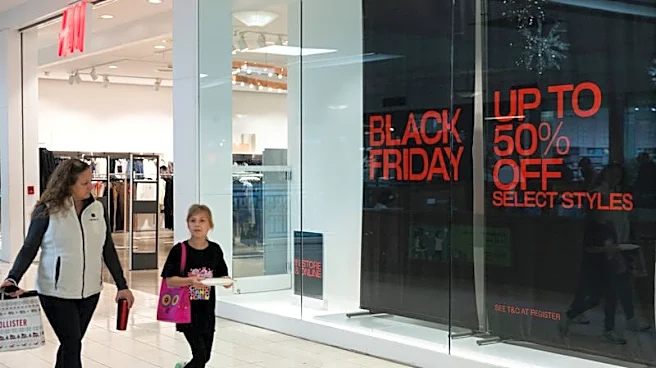
noted that AI provides consumers with extensive information at their fingertips, enabling them to find value. Shoppers are increasingly using AI-powered chatbots to compare prices across various retailers, narrow searches based on budget or product preferences, and discover alternatives for more expensive items. Shay described the technology as 'magic' and anticipates a notable increase in AI adoption this holiday season. This shift comes as consumers continue to grapple with inflation and high energy costs, making the ability to identify savings particularly valuable. The NRF projects 183 million people will shop over the Thanksgiving holiday weekend, with nearly 90% expected to shop online and approximately two-thirds planning to visit physical stores. This overlap suggests that digital tools like AI are complementing, rather than entirely replacing, traditional in-store shopping experiences, allowing consumers to research products online before making in-person purchases.
Why It's Important?
The increasing adoption of AI in holiday shopping signifies a notable evolution in consumer behavior and retail strategies across the U.S. For consumers, AI offers a powerful mechanism to mitigate the impact of persistent inflation and high energy costs by facilitating more efficient bargain hunting. This could lead to more informed purchasing decisions and potentially greater savings for households during a critical spending period. For the retail industry, the widespread use of AI presents both opportunities and challenges. Retailers that effectively integrate AI into their customer experience, such as through personalized recommendations and price comparison tools, may gain a competitive advantage. Conversely, those slow to adapt could risk losing market share to more technologically advanced competitors. The NRF's projection of high online and in-store shopping activity suggests a hybrid retail environment where digital tools enhance the physical shopping experience, rather than replacing it entirely. This trend underscores the importance for businesses to develop omnichannel strategies that seamlessly integrate AI-driven online research with in-person product examination, catering to the evolving preferences of American shoppers.
What's Next?
The trend of AI integration in holiday shopping is likely to continue and expand beyond the current holiday season. Retailers are expected to further invest in AI technologies to enhance customer engagement, personalize shopping experiences, and optimize pricing strategies. This could lead to more sophisticated AI tools that offer predictive analytics for consumer preferences, real-time price adjustments, and even AI-driven customer service. Consumers, having experienced the benefits of AI for bargain hunting, will likely demand more advanced and intuitive AI features from retailers. This could also prompt technology companies to develop more specialized AI applications tailored for e-commerce and retail. Furthermore, the data collected from AI-powered shopping interactions will provide valuable insights into consumer behavior, allowing businesses to refine their marketing and sales approaches. The regulatory landscape around AI and consumer data privacy may also evolve as these technologies become more pervasive, potentially leading to new guidelines for how AI is used in commercial applications.
Beyond the Headlines
The widespread adoption of AI in holiday shopping reflects a broader societal shift towards leveraging advanced technology for everyday economic decisions. This development raises questions about digital literacy and equitable access to these tools, as consumers without reliable internet access or technological proficiency might be at a disadvantage in securing the best deals. Ethically, the use of AI in retail also brings forth concerns regarding data privacy and algorithmic bias. AI systems, if not carefully designed, could inadvertently perpetuate existing biases or manipulate consumer choices in subtle ways. The 'magic' described by NRF President Matt Shay could also be viewed as a double-edged sword, potentially leading to an over-reliance on algorithms for decision-making and a reduction in critical thinking about purchasing choices. In the long term, the integration of AI into shopping could fundamentally alter the relationship between consumers and brands, fostering a more data-driven and personalized, yet potentially less human, retail experience.