








What's Happening?
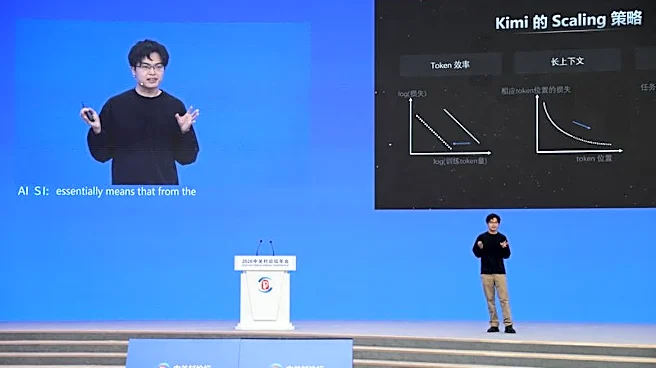
A new artificial intelligence model from China, known as Kimi K3, has surprised the U.S. tech industry with its capabilities, rivaling those of Anthropic's Claude and OpenAI's ChatGPT. Developed by the Beijing-based startup Moonshot, K3 has topped performance
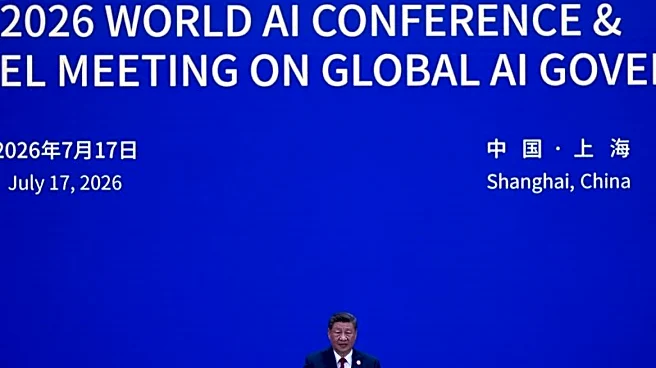
charts in AI large language models, particularly in front-end coding capabilities. This development comes amid ongoing U.S.-China tensions over technology access, with American-led restrictions prompting China to develop its own advanced technologies. The unveiling of K3 coincided with Chinese President Xi Jinping's address at the World Artificial Intelligence Conference in Shanghai, emphasizing global cooperation in AI development.
Why It's Important?
The emergence of K3 highlights the growing competitiveness of Chinese AI models, which could challenge the dominance of U.S. companies like Anthropic and OpenAI. This development underscores the intensifying technological rivalry between the U.S. and China, as both nations strive for leadership in AI. The success of K3 also raises questions about the future of open-source AI models and their impact on innovation and security. As Chinese models continue to advance, U.S. companies may face increased pressure to innovate and address concerns about intellectual property and competitive practices.
What's Next?
The release of K3 is likely to prompt further scrutiny and debate over the use of open-source AI models and the potential for intellectual property disputes. U.S. companies may need to reassess their strategies to maintain a competitive edge in the global AI market. Additionally, the ongoing U.S.-China tech rivalry could lead to more stringent regulations and policies aimed at protecting domestic industries and technologies. The broader implications for international collaboration in AI development remain uncertain, as geopolitical tensions continue to influence technological advancements.