






What's Happening?
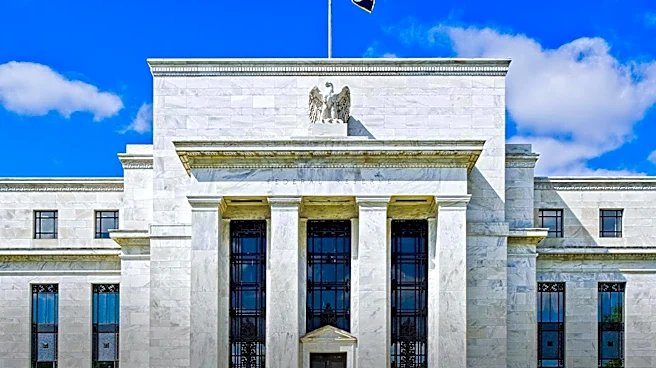
The prime rate in the U.S. stands at 7.00%, effective September 17, 2026, according to the Federal Reserve’s H.15 release. This rate serves as the benchmark for variable-rate loans offered by banks. While each bank technically sets its own prime rate,
the largest U.S. banks typically match each other, creating a unified benchmark. The prime rate is generally determined by adding 3% to the top of the federal funds target range set by the Federal Open Market Committee (FOMC). Although the Fed does not directly set the prime rate, banks usually announce corresponding changes shortly after a Fed rate decision. The prime rate directly impacts the cost of borrowing for various financial products, including lines of credit, SBA loans, and business credit cards, which are priced at prime plus a margin reflecting the borrower’s credit and risk.
Why It's Important?
The current prime rate of 7.00% significantly influences borrowing costs for businesses and consumers across the U.S. For small businesses, understanding the prime rate is crucial because many of their variable-rate debts are tied to it. As the prime rate moves, the interest rates on these loans adjust accordingly, directly impacting cash flow and financial planning. Lenders typically add a margin to the prime rate based on the borrower's creditworthiness, meaning the actual rate paid will be higher than 7.00%. This structure necessitates that businesses carefully review loan agreements to understand the index, margin, adjustment frequency, and any caps or floors. The prime rate's historical volatility, having peaked at 21.5% in 1980 and fallen to 3.25% in recent years, underscores its dynamic nature and the need for continuous monitoring by financial stakeholders.
What's Next?
Small businesses and individuals with variable-rate loans should remain vigilant regarding potential changes in the prime rate, as the Federal Reserve's decisions on the federal funds rate directly influence it. Any future adjustments by the Fed will likely lead to corresponding changes in the prime rate, affecting monthly payments on existing variable-rate debts. Businesses are advised to proactively review their loan portfolios, identify which debts are variable, and understand the terms of their agreements. Planning for potential rate increases by adjusting cash flow forecasts and exploring refinancing options can help mitigate financial risks. The Federal Open Market Committee meets eight times a year, providing regular opportunities for rate adjustments, making it essential for borrowers to stay informed about these scheduled decisions.
Beyond the Headlines
The prime rate's role as a foundational benchmark for lending rates highlights the interconnectedness of monetary policy and everyday financial transactions. Its influence extends beyond direct borrowing costs, subtly shaping investment decisions, consumer spending habits, and the overall economic climate. The mechanism by which banks add a margin to the prime rate also underscores the importance of individual credit health; those with stronger credit profiles can secure more favorable terms, potentially exacerbating financial disparities. Furthermore, the historical fluctuations of the prime rate serve as a reminder of broader economic cycles and the impact of inflation and recessionary pressures on lending environments. This dynamic system necessitates a sophisticated understanding of financial markets for both businesses and individuals to navigate economic shifts effectively.