





What's Happening?
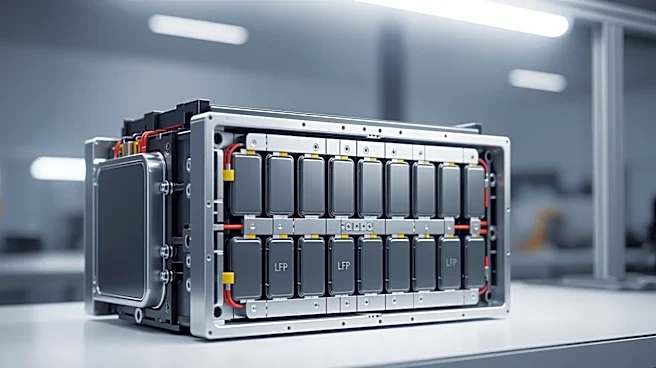
Ford has initiated the production of lithium iron phosphate (LFP) battery cells at its Bluoval Battery Park in Michigan. These batteries will power Ford's upcoming $30,000 midsize electric pickup, which is set to launch in 2027. The company is using technology
licensed from China's CATL to produce these prismatic cells, marking the first time LFP batteries are being used in a mainstream electric vehicle in the U.S. Ford's decision to produce these batteries domestically aims to make electric vehicles more affordable and efficient. The new battery cells are lighter, cheaper, and provide more interior space, promising a lower cost of ownership compared to competitors like the Tesla Model Y. Despite some criticism over the use of Chinese technology, Ford's vice president of platform programs and EV systems, Lisa Drake, emphasized the importance of this decision for delivering affordable electric vehicles.
Why It's Important?
The production of LFP batteries in the U.S. represents a significant step in the domestic electric vehicle industry, potentially reducing reliance on foreign battery technology and supply chains. This move could enhance Ford's competitiveness in the EV market by offering a more affordable option to consumers, thereby increasing EV adoption rates. The initiative also supports job creation in the U.S., as highlighted by Ford's commitment to maintaining high-paying jobs at its facilities. Furthermore, the introduction of a $30,000 electric pickup could disrupt the market, challenging other automakers to lower their prices and innovate further. This development aligns with broader industry trends towards more sustainable and cost-effective transportation solutions.
What's Next?
Ford plans to launch its electric pickup in 2027, with production taking place at the Louisville assembly plant. The company is expected to continue scaling its battery production capabilities to meet anticipated demand. As the launch date approaches, Ford will likely engage in marketing efforts to build consumer interest and address any remaining concerns about the use of Chinese technology. The success of this initiative could influence other automakers to explore similar battery technologies and production strategies, potentially leading to a more competitive and diverse EV market in the U.S.