







What's Happening?
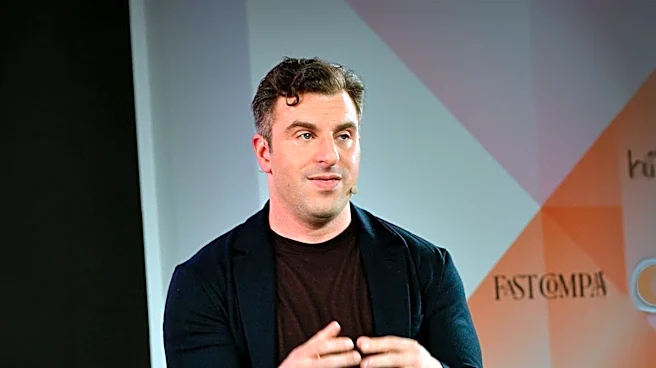
Airbnb co-founder and CEO Brian Chesky has discussed his journey from an art school graduate to leading a $100 billion public company, reflecting on how conventional executive management advice nearly led to the company's downfall. During an interview,
Chesky shared that the existential crisis brought on by COVID-19 in March 2020, which saw Airbnb lose 80% of its business within eight weeks, forced him to re-engage in 'founder mode' by focusing on operational details. He also noted that extreme commercial success, such as the company's $100 billion IPO in December 2020, did not bring lasting personal happiness. Chesky emphasized that traditional management practices, which often advise CEOs to communicate only with direct reports, can blind leadership to underlying operational issues until a crisis emerges. Additionally, Airbnb.org, an initiative first conceived by Chesky in 2008, plans to expand its emergency housing efforts to provide one million free nights annually.
Why It's Important?
Chesky's insights into leadership and the challenges faced by a rapidly growing company offer valuable lessons for the U.S. business landscape. His experience highlights the potential pitfalls of conventional management strategies, particularly for innovative companies that may require a more hands-on approach from their founders during critical periods. The near collapse of Airbnb during the pandemic underscores the vulnerability of even large, successful companies to unforeseen global events and the importance of adaptable leadership. Furthermore, the company's commitment to Airbnb.org demonstrates a growing trend among corporations to integrate social impact initiatives into their core business models, potentially influencing public perception and stakeholder engagement. This approach could set a precedent for other U.S. businesses to consider their broader societal roles beyond profit generation.
What's Next?
Airbnb.org's plan to scale emergency housing to one million free nights a year indicates a continued focus on social responsibility, which could enhance the company's brand image and attract socially conscious consumers and investors. Chesky's reflections on leadership suggest a potential shift in his management philosophy, possibly leading to a more engaged and operationally aware leadership style within Airbnb. This could influence how the company navigates future market challenges and opportunities. The broader business community may also observe Airbnb's strategies for balancing rapid growth with social impact, potentially adopting similar models. The company's ability to recover from a significant downturn during the pandemic also positions it as a case study for resilience in the face of economic shocks, offering insights for other U.S. companies preparing for future uncertainties.
Beyond the Headlines
Chesky's candid admission about the personal toll of extreme success and the limitations of conventional management advice touches upon deeper themes within corporate culture. It suggests a re-evaluation of what constitutes effective leadership in the modern era, moving beyond purely financial metrics to include personal well-being and operational immersion. The emphasis on 'founder mode' during a crisis highlights the unique value that original visionaries can bring, especially when a company faces existential threats. This narrative could encourage a more holistic view of leadership development, where emotional intelligence and a deep understanding of core operations are as crucial as strategic planning. The expansion of Airbnb.org also points to an evolving understanding of corporate responsibility, where companies are expected to leverage their resources for social good, potentially influencing ethical considerations in investment and consumer choices.