





What's Happening?
The European Union is making significant progress in finalizing bilateral trade agreements with several Southeast Asian nations. Negotiations with Indonesia have concluded, and Jakarta aims to sign its agreement in October 2026, with implementation planned
for early 2027. Free trade agreements with Singapore and Vietnam are already in effect. Talks with Thailand, which restarted in 2023, have seen nine negotiating rounds, while Malaysia resumed negotiations in early 2025 after a 13-year hiatus, with both expected to be finalized by late 2026 or early 2027. Additionally, the EU and the Philippines recently reached a 'substantial agreement' on their free trade agreement. This push towards bilateral deals comes after earlier attempts for a region-to-region agreement between the EU and ASEAN stalled due to significant economic disparities among ASEAN members and disagreements over the scope of such a deal.
Why It's Important?
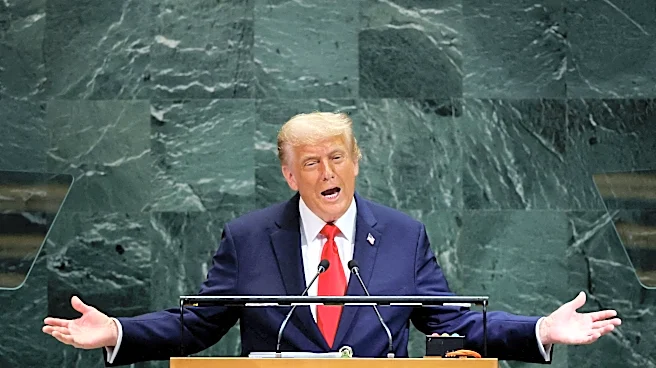
This development is important for U.S. industries and global trade dynamics as it signifies a strategic shift in the EU's trade policy, aiming to diversify supply chains and reduce reliance on major partners like China and the United States. For U.S. businesses, increased EU trade with Southeast Asia could mean heightened competition in these markets, potentially impacting export opportunities for American goods and services. The EU's focus on Southeast Asia, a region central to supply chains for semiconductors, electronics, and electric vehicles, could also influence global investment patterns and the location of manufacturing hubs. This move by the EU is partly driven by the 'protectionist and erratic trade policies' of President Trump, prompting Brussels to seek new markets and more resilient supply chains. The U.S. will need to monitor these evolving trade relationships to assess their impact on its own economic interests and strategic positioning in the Indo-Pacific.
What's Next?
Indonesia's planned signing of its trade agreement with the EU in October 2026, followed by implementation in early 2027, will be a key milestone. The finalization of deals with Thailand, Malaysia, and the Philippines in the coming months will further solidify the EU's presence in the region. The EU-ASEAN Business Council continues to advocate for a region-to-region economic framework, potentially starting with modular agreements like a Digital Trade Agreement or an Investment Protection Agreement, despite past difficulties. The 50th Anniversary of EU-ASEAN relations in 2027 is seen as a potential catalyst for renewed efforts towards a broader regional agreement. The U.S. will likely observe these developments closely, potentially adjusting its own trade strategies and engagements in Southeast Asia to maintain its competitive edge and influence.
Beyond the Headlines
Beyond the immediate trade figures, the EU's intensified engagement with Southeast Asia reflects a broader geopolitical strategy. It underscores a global trend of major economic blocs seeking to 'de-risk' from over-reliance on single markets and build more diversified and resilient supply chains. The challenges faced in negotiating a region-to-region EU-ASEAN deal highlight the complexities of integrating economies with vast differences in development levels and regulatory standards, particularly concerning social, labor, and environmental issues. This strategic pivot by the EU also serves as a counter-narrative to the protectionist tendencies observed in some major economies, emphasizing the continued pursuit of free trade agreements as a tool for economic growth and geopolitical influence. The long-term implications could include a re-shaping of global trade routes and a more multipolar economic order.