





What's Happening?
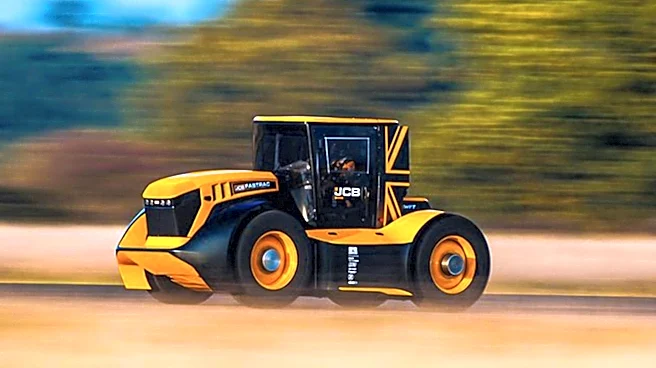
British driver Andy Green set a new world speed record of 406 mph in a hydrogen-powered JCB supercar at the Bonneville Salt Flats in Utah. The vehicle, known as the JCB Hydromax, is powered by two hydrogen internal combustion engines. This achievement
surpasses the previous hydrogen engine speed record of 185 mph. JCB, a UK-based company known for its construction and agricultural equipment, has invested over $132 million in developing hydrogen combustion engines as a cleaner alternative to diesel. The company plans to integrate these engines into its machinery, emphasizing hydrogen as a viable clean energy source.
Why It's Important?
This record-setting event highlights the potential of hydrogen as a sustainable energy source for high-performance vehicles and heavy machinery. JCB's investment in hydrogen technology reflects a broader industry shift towards reducing carbon emissions and exploring alternative fuels. The success of the JCB Hydromax could accelerate the adoption of hydrogen engines in various sectors, offering a cleaner alternative to traditional fossil fuels. This development is significant for the U.S. market, as JCB expands its operations with a new factory in Texas, potentially creating jobs and advancing the use of hydrogen technology in American manufacturing.
What's Next?
JCB's focus on hydrogen technology is expected to continue, with plans to deploy hydrogen engines across its product line. The company's new factory in Texas will play a crucial role in this expansion, supporting the production of hydrogen-powered machinery for the U.S. market. As hydrogen technology gains traction, it may influence regulatory policies and encourage further investment in clean energy solutions. The success of the JCB Hydromax could also inspire other manufacturers to explore hydrogen as a viable alternative to electric and diesel engines, potentially transforming the landscape of the automotive and machinery industries.