








What's Happening?
U.S. consumer confidence saw a slight increase in June, according to a survey by the Conference Board. The consumer confidence index rose to 91.2 from a revised 90.6 in May. This increase comes despite deteriorating perceptions of the labor market, with
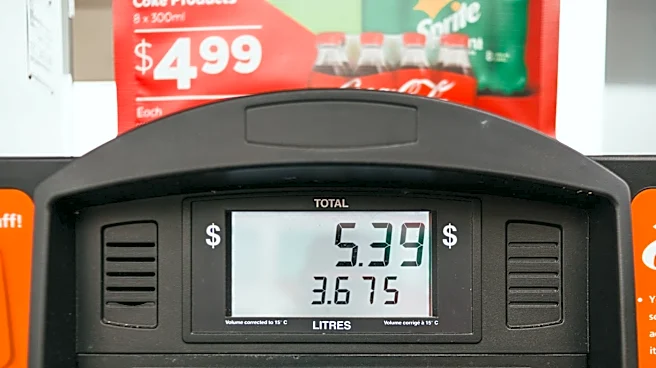
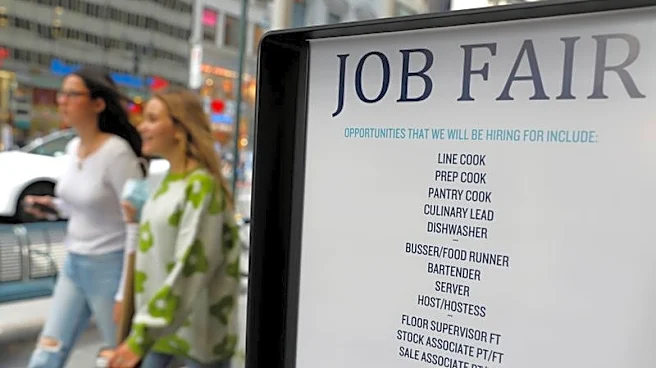
a significant rise in the number of people viewing jobs as hard to get, reaching a near 5-1/2 year high. The survey highlights that while consumer appraisals of current business conditions improved slightly, concerns about the labor market persisted. Gasoline prices, which fell below $4 a gallon for the first time since the U.S.-Israel conflict with Iran began in February, contributed to the rise in consumer confidence.
Why It's Important?
The rise in consumer confidence is a positive indicator for the U.S. economy, suggesting that consumers may be more willing to spend, which can drive economic growth. However, the deteriorating perception of the labor market could pose challenges. If consumers believe jobs are hard to find, it may lead to reduced spending and economic activity. The drop in gasoline prices is a relief for consumers, potentially increasing disposable income and spending power. The mixed signals from the consumer confidence index and labor market perceptions highlight the complexity of the current economic landscape, where external factors like international conflicts can have significant domestic impacts.
What's Next?
Future consumer confidence will likely depend on developments in the labor market and international events affecting economic conditions, such as the ongoing U.S.-Israel conflict with Iran. Policymakers and businesses will need to monitor these trends closely to adapt strategies that support economic stability and growth. The labor market's performance in the coming months will be crucial in determining consumer behavior and overall economic health.