








What's Happening?
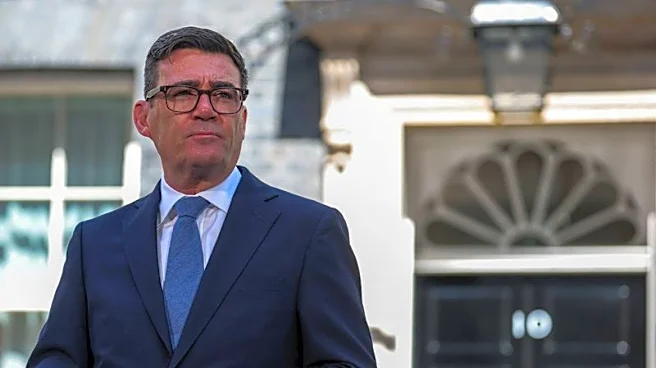
Jamie Dimon, CEO of JP Morgan, has issued a warning to Andy Burnham, the new UK Prime Minister, regarding potential tax increases on banks. Dimon suggests that such measures could jeopardize JP Morgan's plans to construct a £3 billion headquarters in London.
The bank's CEO, known for his critical stance on the UK's bank tax surcharge, expressed concerns that targeting the banking sector for additional revenue could drive investment away from the UK. Dimon highlighted that banks in the UK already face a 28% corporation tax rate, which is higher than the standard 25%, along with a separate levy on their UK balance sheets. He emphasized the potential adverse consequences of penalizing companies with extraordinary taxes, suggesting that it could lead to capital flight from the country.
Why It's Important?
The warning from JP Morgan's CEO underscores the delicate balance governments must maintain between generating revenue through taxation and fostering a competitive business environment. Dimon's comments highlight the potential risks of increased taxation on the banking sector, which could lead to reduced investment and economic growth. For the UK, maintaining a competitive tax system is crucial to attracting and retaining international businesses, especially in the financial sector. The potential withdrawal of JP Morgan's investment could have significant implications for the UK's economy, affecting job creation and the country's standing as a global financial hub.
What's Next?
If the UK government proceeds with the proposed tax increases, it could face significant pushback from the banking industry and other business sectors. JP Morgan's decision on whether to continue with its London headquarters project will likely depend on the government's final stance on bank taxation. The situation may also prompt other financial institutions to reassess their investment plans in the UK, potentially leading to broader economic implications. Stakeholders, including trade unions and business leaders, will be closely monitoring the government's actions and their impact on the UK's economic landscape.