

What's Happening?
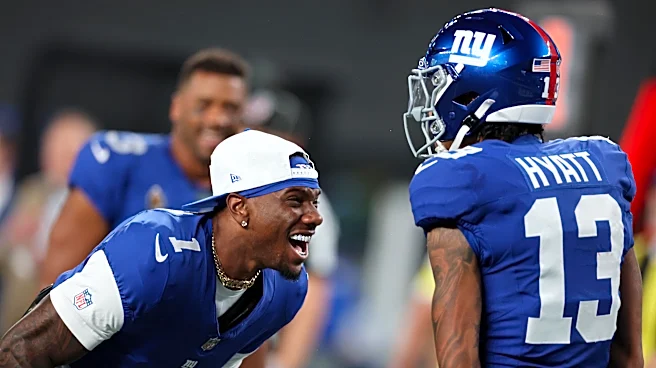
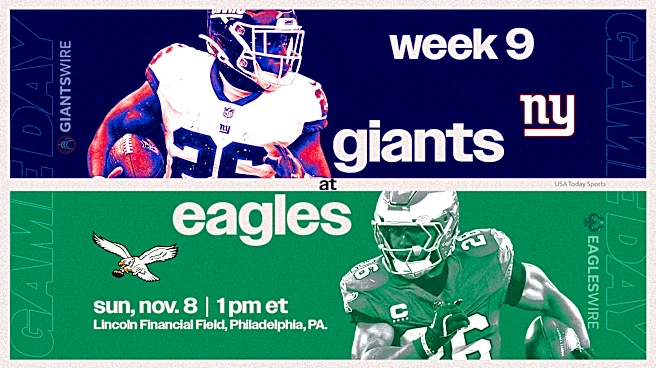
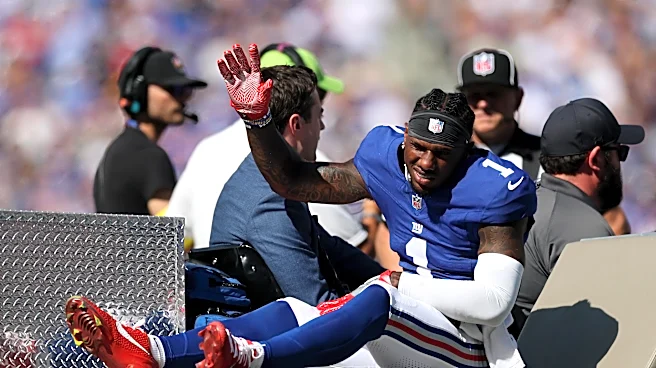
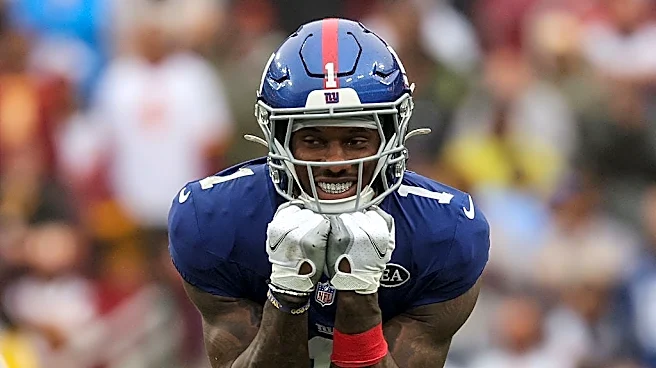
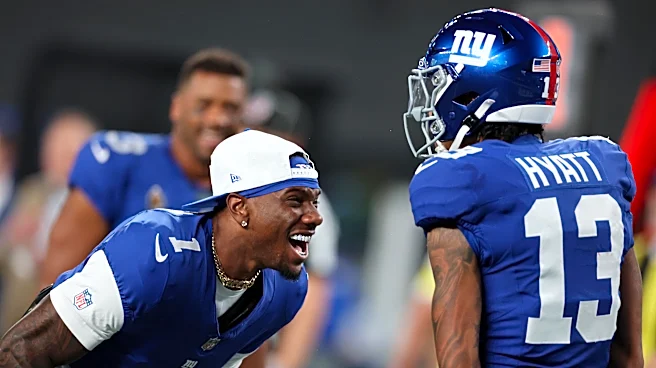
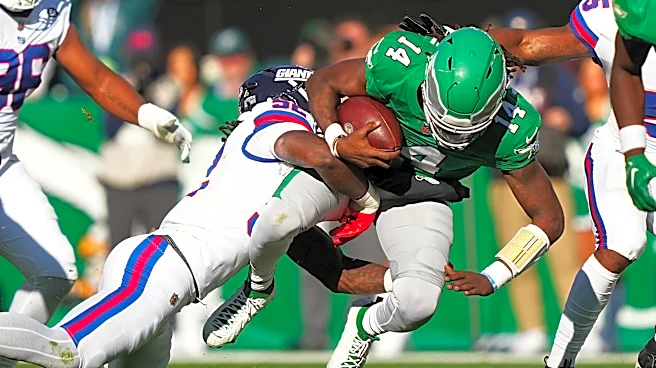
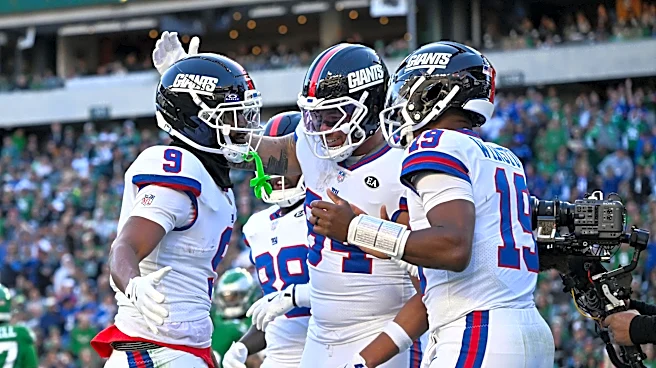
New York Giants wide receiver Malik Nabers has publicly responded to criticism from Fox broadcasters Joe Davis and Greg Olsen regarding his on-field demeanor during Sunday's victory against the Philadelphia Eagles. During the game, after a fourth-quarter
incompletion, Davis commented on Nabers' 'terrible' body language, with Olsen adding that 'It’s just not good.' Nabers, who caught five passes for 43 yards, expressed his frustration with these remarks, stating that he felt they were an attack on his character as a football player and teammate. He clarified that his expressions are consistent, regardless of game performance, and stem from his competitive nature. Olsen later denied calling Nabers a bad teammate, but Nabers maintained that the comments were relayed to him as such and were inaccurate.
Why It's Important?
This incident highlights the increasing scrutiny on professional athletes' conduct and expressions, even during live game broadcasts. For players like Malik Nabers, public commentary from prominent broadcasters can significantly impact their public perception and potentially their professional image. The exchange also underscores the tension between media analysis and athletes' personal interpretations of their actions. While broadcasters aim to provide insights, athletes often feel their intentions are misunderstood or misrepresented. This situation could lead to broader discussions within sports media about the responsibility of commentators to accurately portray athletes' character and the potential for misinterpretation of on-field emotions.
What's Next?
Malik Nabers is now focused on the upcoming game against the Washington Commanders. He has indicated that he is moving past the incident, though he mentioned that Greg Olsen is welcome to reach out for a conversation. This situation may prompt ongoing discussions within the New York Giants organization regarding player-media relations and how athletes manage public perception. It could also influence how broadcasters approach commentary on player demeanor in future games, potentially leading to more nuanced observations or direct engagement with players to understand their perspectives.
Beyond the Headlines
The controversy surrounding Malik Nabers' body language touches upon deeper themes of emotional expression in professional sports and the role of media in shaping narratives. In a high-stakes environment like the NFL, athletes are under constant pressure, and their emotional responses are often magnified and scrutinized. Nabers' defense of his 'mean' and 'raging' demeanor as a sign of passion rather than frustration challenges conventional interpretations of 'good' body language. This incident could spark a broader conversation about authenticity versus perceived professionalism in sports, and how athletes can express their competitive drive without being mislabeled as disengaged or negative.