




What's Happening?
The University of Oklahoma's football game against Ole Miss, originally scheduled for Saturday afternoon, has been postponed to Sunday. This change occurred because the Ole Miss team's travel plans were disrupted by a nationwide FAA ground stoppage on Friday.
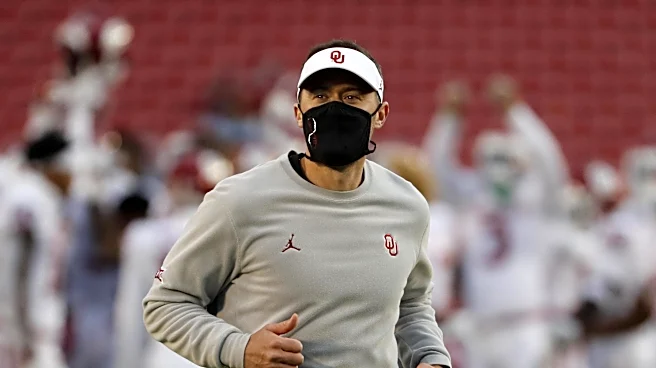
The Rebels were unable to depart Oxford, Mississippi, on Friday night as planned. Although the ground stop was lifted, their charter company could not accommodate a late-night departure, leading to a delay until Saturday afternoon. Consequently, SEC officials announced early Saturday that the game would be played at noon on Sunday. Oklahoma Athletics Director Roger Denny stated that despite strong objections from OU, Commissioner Sankey decided to move the game, informing OU that failure to play on Sunday would result in a forfeit. The television network for the rescheduled game will be determined later; it was initially slated for SEC Network. The Sooners enter the game with a 5-4 overall record and 3-3 in SEC play, while Ole Miss holds a 6-3 overall record and 4-3 in conference play.
Why It's Important?
This rescheduling highlights the significant impact that broader national infrastructure issues, such as an FAA ground stop, can have on major sporting events and their logistical complexities. For college football, particularly within a high-profile conference like the SEC, such disruptions can affect team preparation, fan travel, and broadcast schedules. The decision by Commissioner Sankey to enforce the Sunday game, even over Oklahoma's objections and under threat of forfeit, underscores the conference's authority and commitment to completing its schedule. This situation also introduces new variables for the game itself, as the weather forecast for Sunday in Norman, Oklahoma, predicts wet, cold, and cloudy conditions with rain throughout the day and temperatures in the low to mid-40s. These conditions could significantly alter game strategy and player performance, potentially impacting the outcome for both teams vying for better conference standings.
What's Next?
The Oklahoma Sooners and Ole Miss will now play their football game on Sunday at noon. The immediate next step for both teams will be to adjust their final preparations for the Sunday kickoff, taking into account the altered schedule and the anticipated cold and rainy weather conditions. Fans who planned to attend the Saturday game will need to adjust their travel and attendance plans accordingly. The television network for the game is yet to be announced, which will be a key piece of information for viewers. Following the game, both teams will continue their respective seasons, with the outcome potentially influencing their bowl eligibility and final conference standings. The broader implications for future scheduling in college sports might include contingency planning for widespread travel disruptions, especially for teams relying on air travel for away games.
Beyond the Headlines
The incident underscores the vulnerability of large-scale events to systemic failures in national infrastructure. While the FAA ground stop was a technical issue, its ripple effects demonstrate how interconnected various sectors are. For college athletics, this event could prompt discussions about scheduling flexibility, contractual obligations with charter services, and the extent of conference authority in mandating game times under unforeseen circumstances. The threat of a forfeit, as communicated to OU, highlights the high stakes involved in maintaining the integrity of the league schedule. Furthermore, the impact on fan experience, including potential financial losses for those with non-refundable travel or accommodation, points to the broader economic and social dimensions of such disruptions. It also subtly brings to light the reliance on precise logistical chains that underpin modern sports entertainment, where even minor deviations can cause significant cascading effects.