


What's Happening?
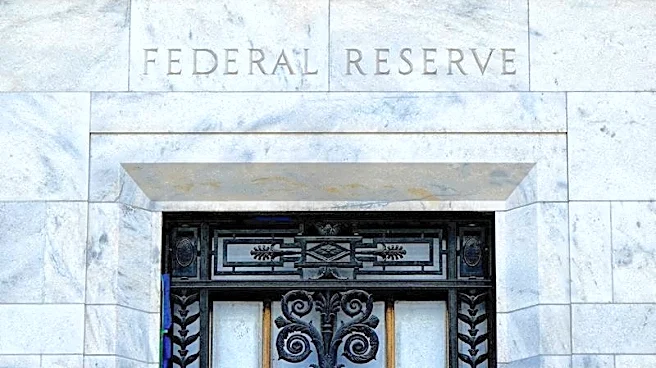
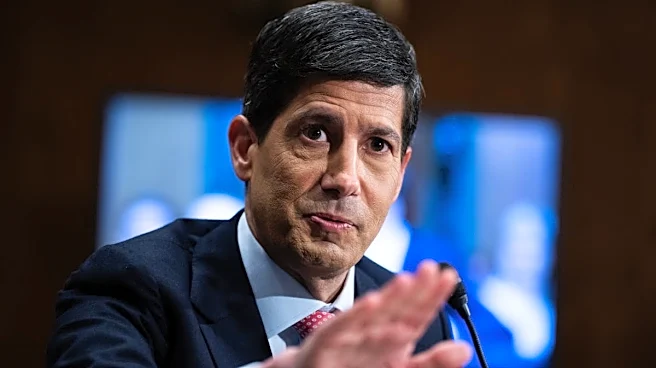
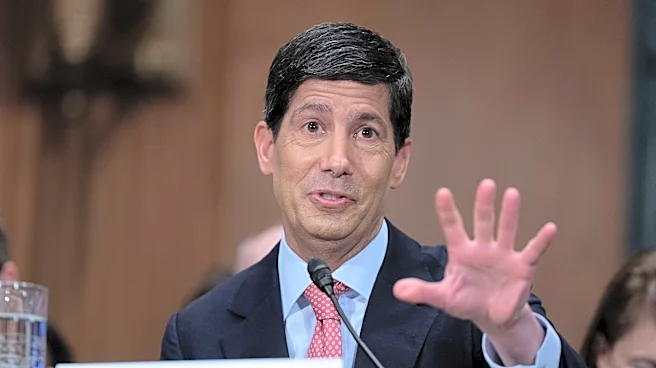
The Federal Reserve, led by Chairman Kevin Warsh, has decided to keep the benchmark lending rate unchanged at 3.5%-3.75% during its latest meeting. The decision comes amid ongoing inflation concerns and geopolitical tensions in the Middle East. The meeting was
marked by dissent among Fed officials, with some advocating for a rate hike to combat inflation. Warsh emphasized the importance of market-driven assessments of the economy, moving away from the Fed's traditional forward guidance approach. This shift has left investors uncertain about the Fed's future actions, contributing to market volatility.
Why It's Important?
The Fed's decision to maintain interest rates reflects the complex economic landscape, influenced by factors such as the Iran conflict and rising energy prices. The lack of clear guidance from the Fed introduces uncertainty into financial markets, potentially affecting investment decisions and economic growth. As the Fed navigates these challenges, its approach could have significant implications for inflation control and monetary policy. The emphasis on market-driven assessments may lead to greater volatility, impacting businesses and consumers who rely on stable economic conditions for planning and decision-making.
What's Next?
The Fed's future actions will likely depend on evolving economic conditions, including inflation trends and geopolitical developments. Investors and analysts will closely monitor upcoming Fed meetings and statements for any indications of policy shifts. The Fed's approach to managing inflation and interest rates will be critical in shaping the U.S. economic outlook. As the Fed continues to assess the impact of AI and other technological advancements on inflation, its decisions will influence broader economic trends and the stability of financial markets.