
What's Happening?
The Y2K fashion aesthetic, characterized by styles from the late 1990s and early 2000s, is experiencing a significant resurgence in the U.S. This revival encompasses a wide range of fashion and beauty choices, including frosted tips, low-rise jeans, velour
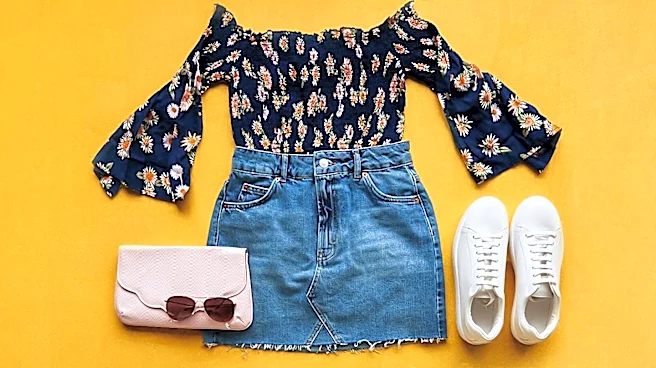
sweats, baby tees, cargo pants, mini skirts, and butterfly clips. Brands like Hollister are reissuing archival styles, such as babydoll tops and ultra-low-rise denim, to cater to this renewed interest, particularly among Gen Z. The trend is described as playful, flashy, and nostalgic, moving beyond previously cherished Y2K references to embrace styles once disavowed. Even the bandage dress, with its 2000s connotations, is making a comeback, seen on celebrities and at major events. This widespread adoption indicates a cultural shift towards embracing the 'tacky' and experimental aspects of early 2000s fashion.
Why It's Important?
This Y2K fashion revival is important as it highlights the cyclical nature of trends and the powerful influence of nostalgia on consumer behavior, especially among younger generations like Gen Z. For retailers, understanding and adapting to these shifts is crucial for relevance and market share. Brands like Hollister are successfully leveraging their heritage by reintroducing popular Y2K styles, directly appealing to a demographic that views these trends as fresh and exciting. This also impacts the broader fashion industry, influencing design, marketing, and inventory decisions. The re-emergence of styles once considered 'embarrassing' challenges conventional notions of taste and aesthetics, suggesting a greater willingness among consumers to experiment and embrace fashion that is less self-serious. Furthermore, the connection between music and fashion trends means that the Y2K aesthetic is not just about clothing but also about a broader cultural experience, influencing music choices and lifestyle.
What's Next?
The Y2K revival is expected to continue evolving, with further exploration of early 2000s fashion and beauty elements. As the trend progresses, more niche or previously overlooked aspects of the era may gain popularity. Retailers will likely continue to innovate by blending Y2K elements with modern sensibilities, offering updated versions of classic styles. The influence of social media platforms like TikTok and Instagram will remain critical in accelerating these trends, as users discover and share vintage aesthetics, creating a continuous feedback loop between past and present. This could lead to more brands, both fast fashion and luxury, incorporating Y2K-inspired collections. Additionally, the interplay between fashion and music suggests that as Y2K music continues to be rediscovered, its associated visual language will also see renewed interest, potentially leading to new collaborations and themed events.
Beyond the Headlines
The resurgence of Y2K fashion reflects a deeper cultural phenomenon of selective nostalgia, where consumers, particularly younger ones, curate and re-contextualize elements from past decades. This isn't merely a rehash of old trends but a reinterpretation, often infused with contemporary values and a sense of irony. The embrace of 'tacky' or 'silly' styles, such as frosted tips, can be seen as a rejection of overly serious or minimalist aesthetics, favoring playfulness and self-expression. This trend also underscores the power of digital platforms in shaping cultural memory, as algorithms and user-generated content make past eras easily accessible and re-engageable. The Y2K revival, therefore, is not just about clothes; it's about how a generation interacts with history, reclaims narratives, and defines its identity through a blend of retro and modern influences, highlighting a shift towards more malleable and less rigid fashion norms.